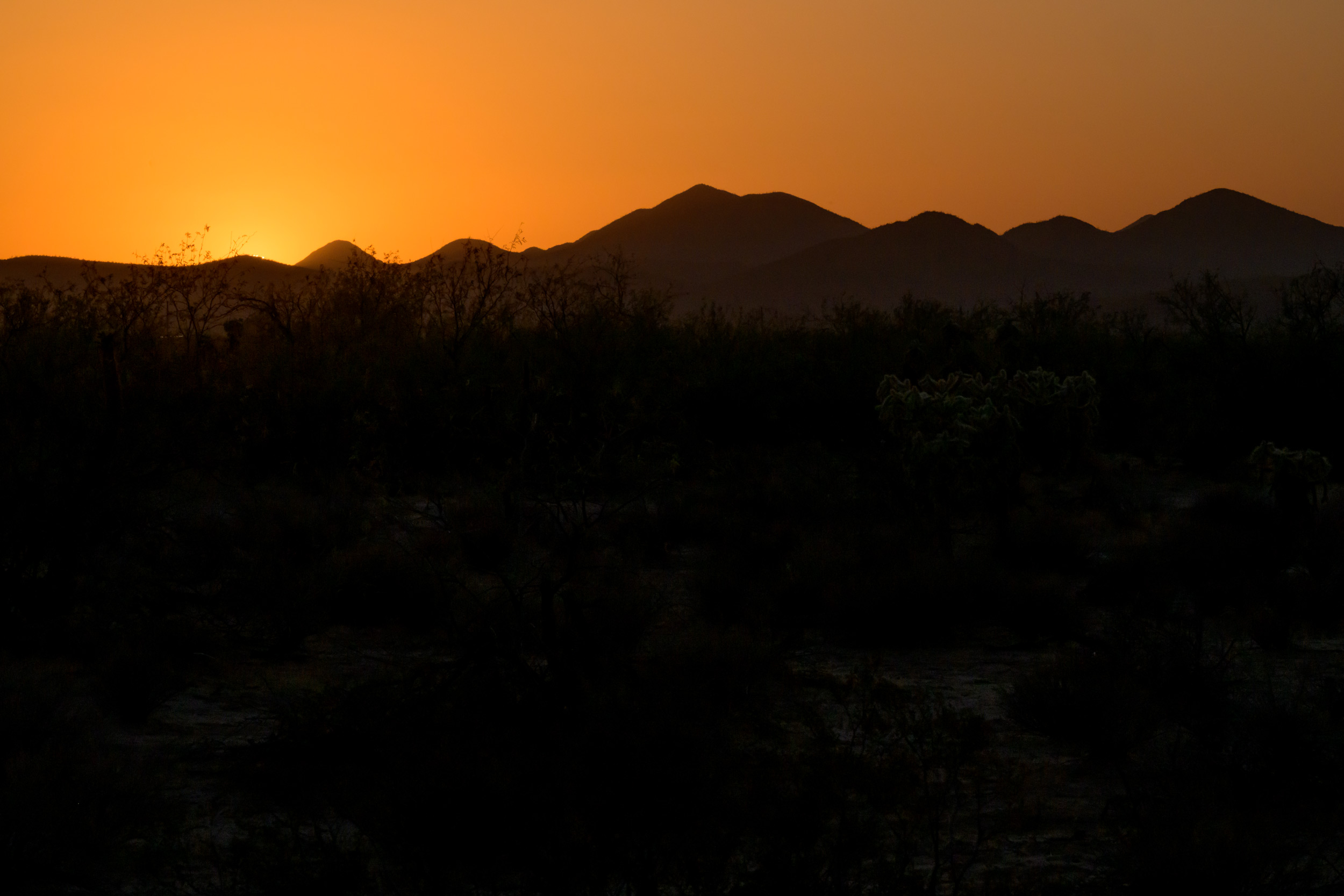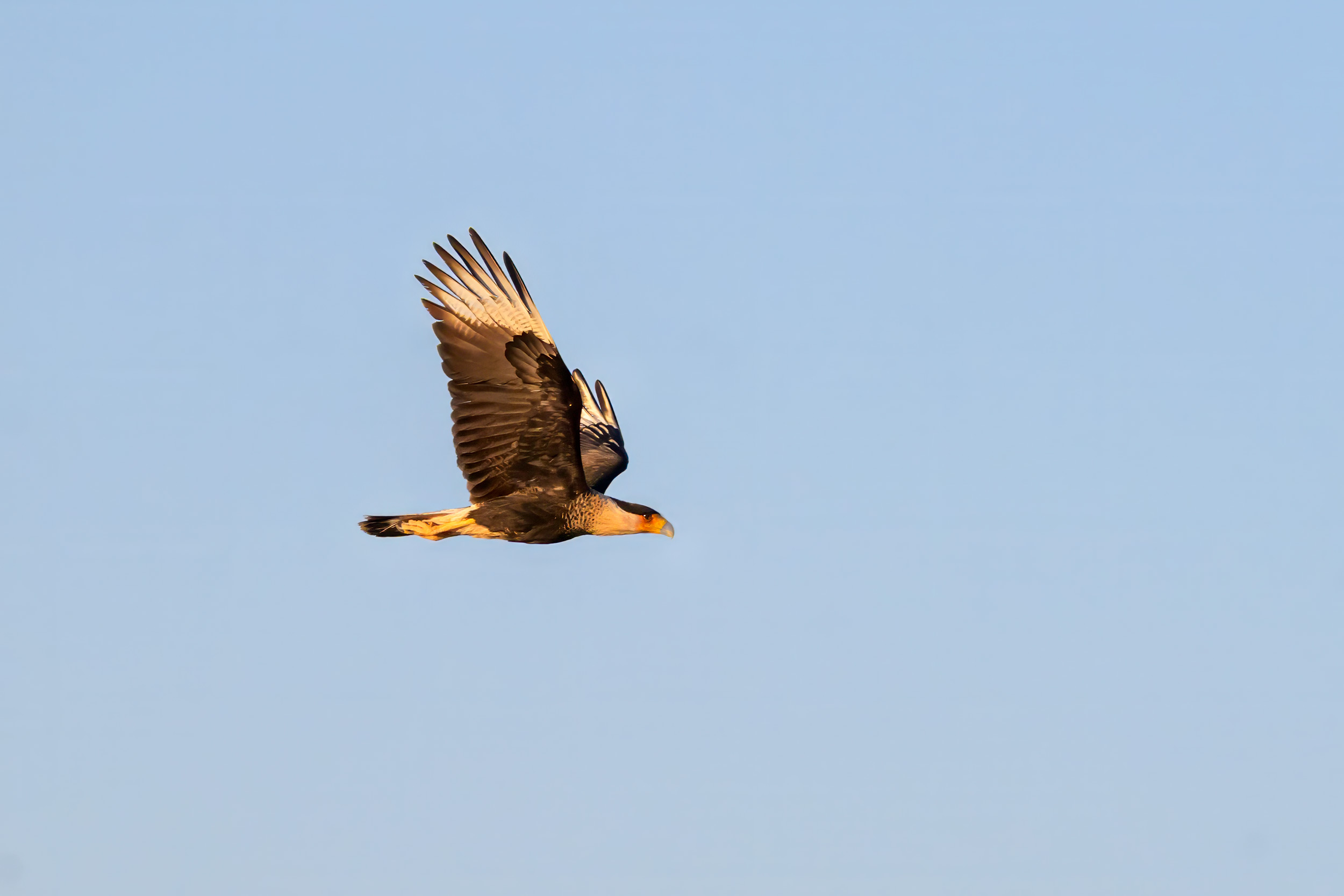
Crested Caracara
Caracara plancus
Anchor Babies of the Sonoran Desert
Somewhere outside Tucson, Arizona
An Amazing Opportunity
My friends and I were attending a North America Nature Photography Association (NANPA) Conference in Tucson, Arizona in May 2025. Before the event, we made time to see some of the local sites.
When visiting Sweetwater, a Tucson wastewater facility with outdoor stormwater retention ponds, we ran into someone who told us about a rare bird alert for a Crested Caracara nest.
Everyone was excited to see such a rare bird. We headed out that evening directly after presentations ended.
Where in the US Might You See A Crested Caracara?
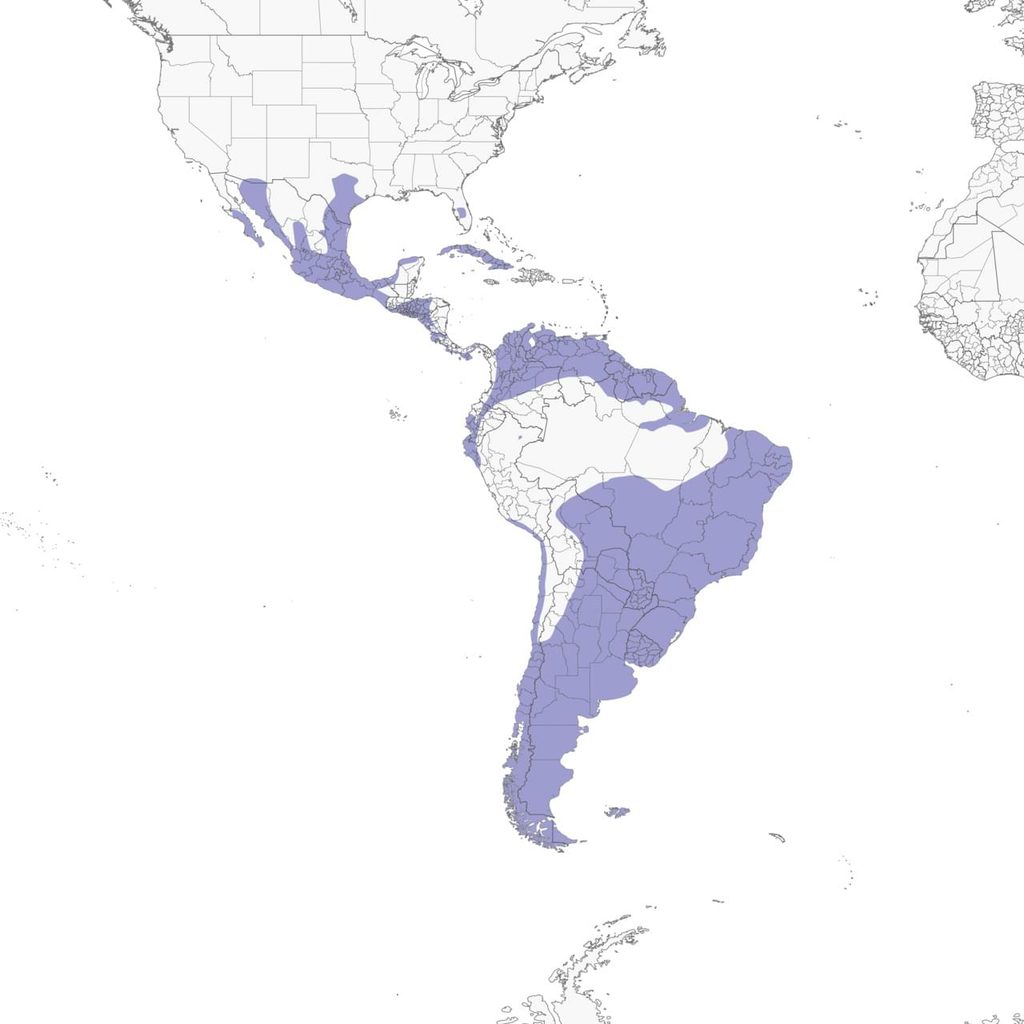
As you can see from this map from Cornell University All About Birds website, you can see how the Crested Caracara’s range barely stretches into Arizona but more so into Texas. Florida has a relict population of non-migratory birds, which you can read about here.
I felt very lucky to have been in the right place at the right time.
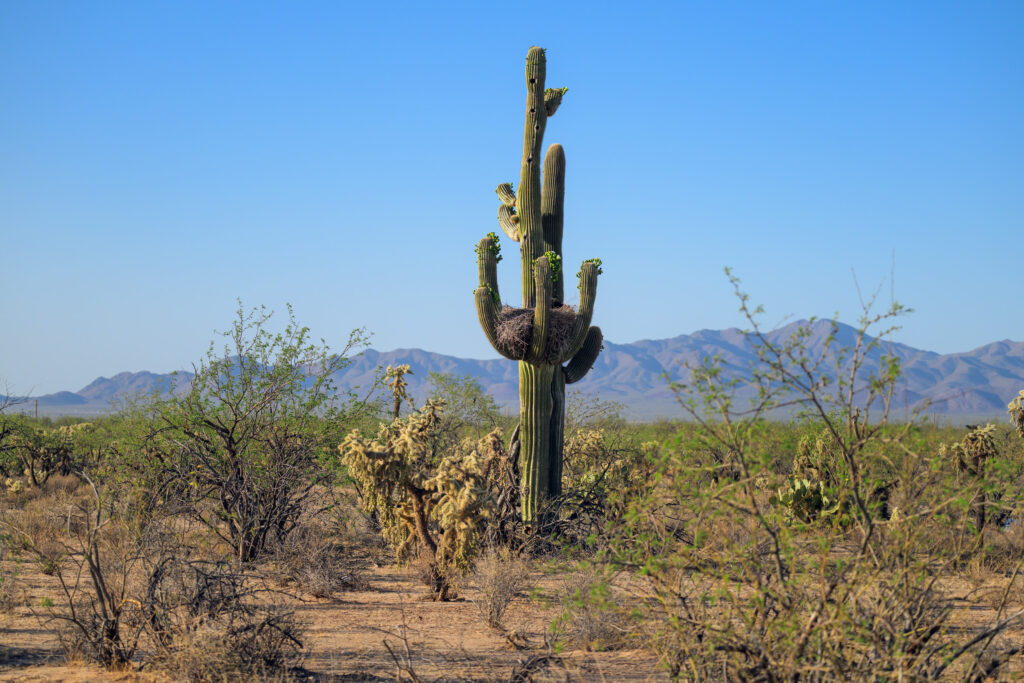
There’s Nothing Quite Like a Crested Caracara
I vaguely knew what a Crested Caracara was when I put the coordinates into my navigation system. I did know I hadn’t seen one before and was really excited for this adventure. My car was full of friends and I couldn’t have been happier.
If you haven’t seen one before, it kind of looks like a Harpy from morning cartoons. It behaves like a vulture and can move on the ground with ease in order to overtake their prey. They have no qualms about wading in water and pull turtles out of the mud with their feet.
Remarkably, these birds are actually a tropical falcon. They don’t nest like falcons, they eat like vultures, and are good partners to raise a family with.
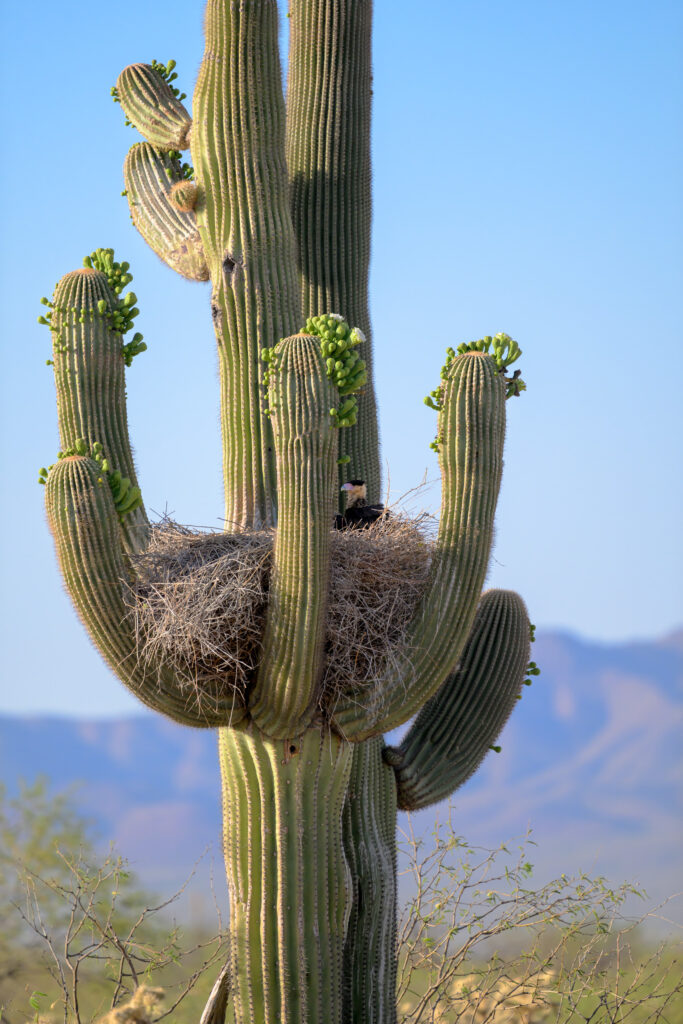
Now That’s a Nest!
The Crested Caracara is a rare breeder in the United States. Arizona and Texas are at the very Northern tip of their range.
The male and female build their nest together using stems, twigs, and vines. To me, it looks like a very large Magpie nest. Many reuse their nests like Bald Eagles, so they get bigger over time. If they’re building one from scratch, it can take anywhere from 2-4 weeks.
Caracaras Have Strong Partnerships
There’s no separation of “blue” and “pink” jobs in this relationship! Both the male and female take turns incubating the eggs, which can take anywhere from 30-33 days.
After the eggs hatch, both parents will work to keep the chicks fed and protected for 42-56 days! After their chicks fledge, they will continue to teach them the ways of the Caracara for about 3 months before they go their separate ways.
During their time together, the birds can be seen preening each other, which is a behavior referred to as allopreening.
The partnership bonds between the pair can last for several years.
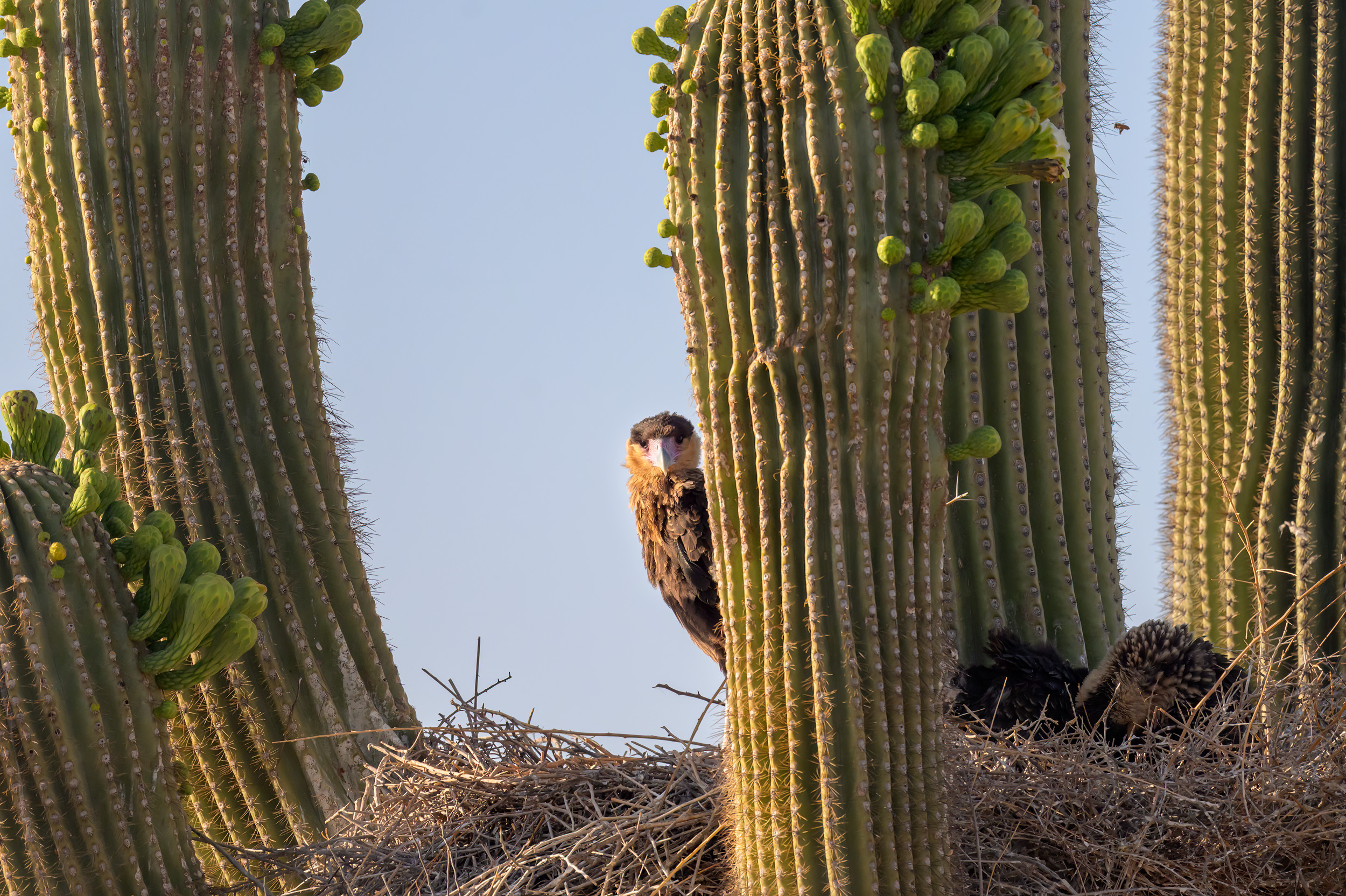
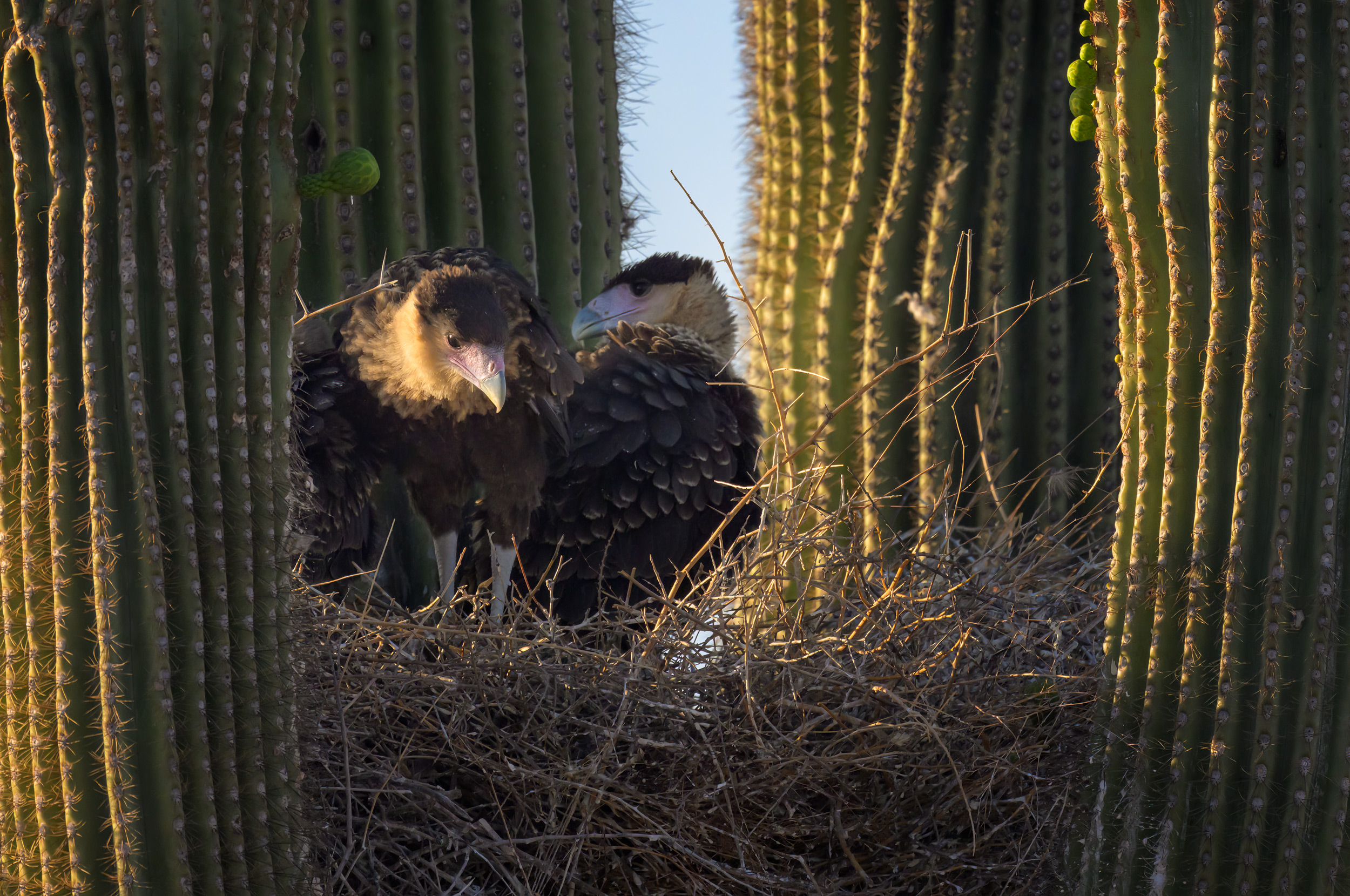
As you can see, these birds are about to fledge, which means fly for the first time.
Ethical Photography During Nesting Season Requires a Long Lens
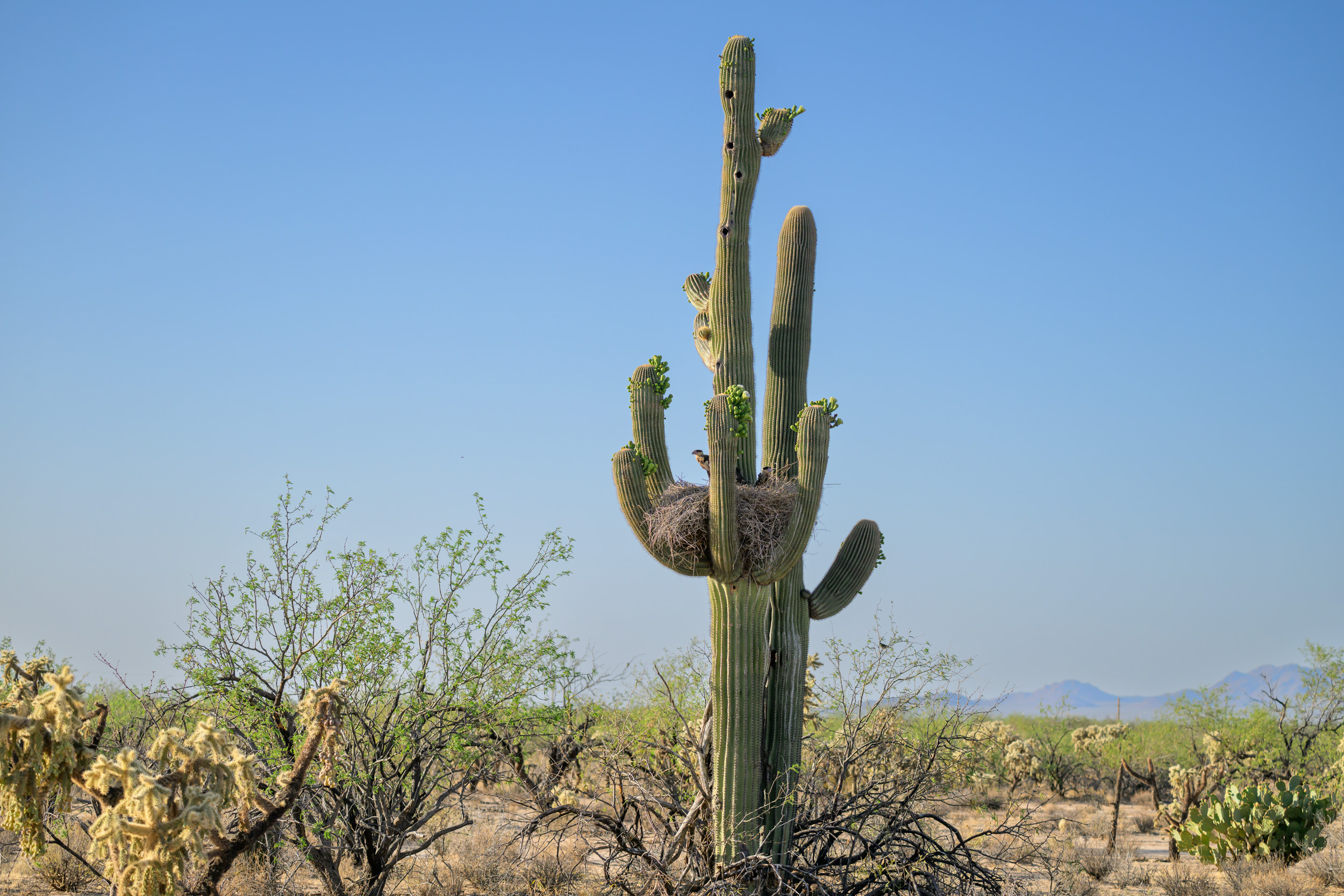
This Saguaro cactus is on private property and behind a fence.
My images are taken with a Nikon Z8, which is a full-frame camera. This image was shot at 100mm f/4.5 giving more context than subject, which is important when trying to tell a story and essential when photographing nesting behavior.
Nesting birds are sensitive and parents are exerting a lot of energy to keep their chicks fed. It is imperative to give them space to do this and use a long lens to avoid disturbances.
The Magic of the 600mm Lens
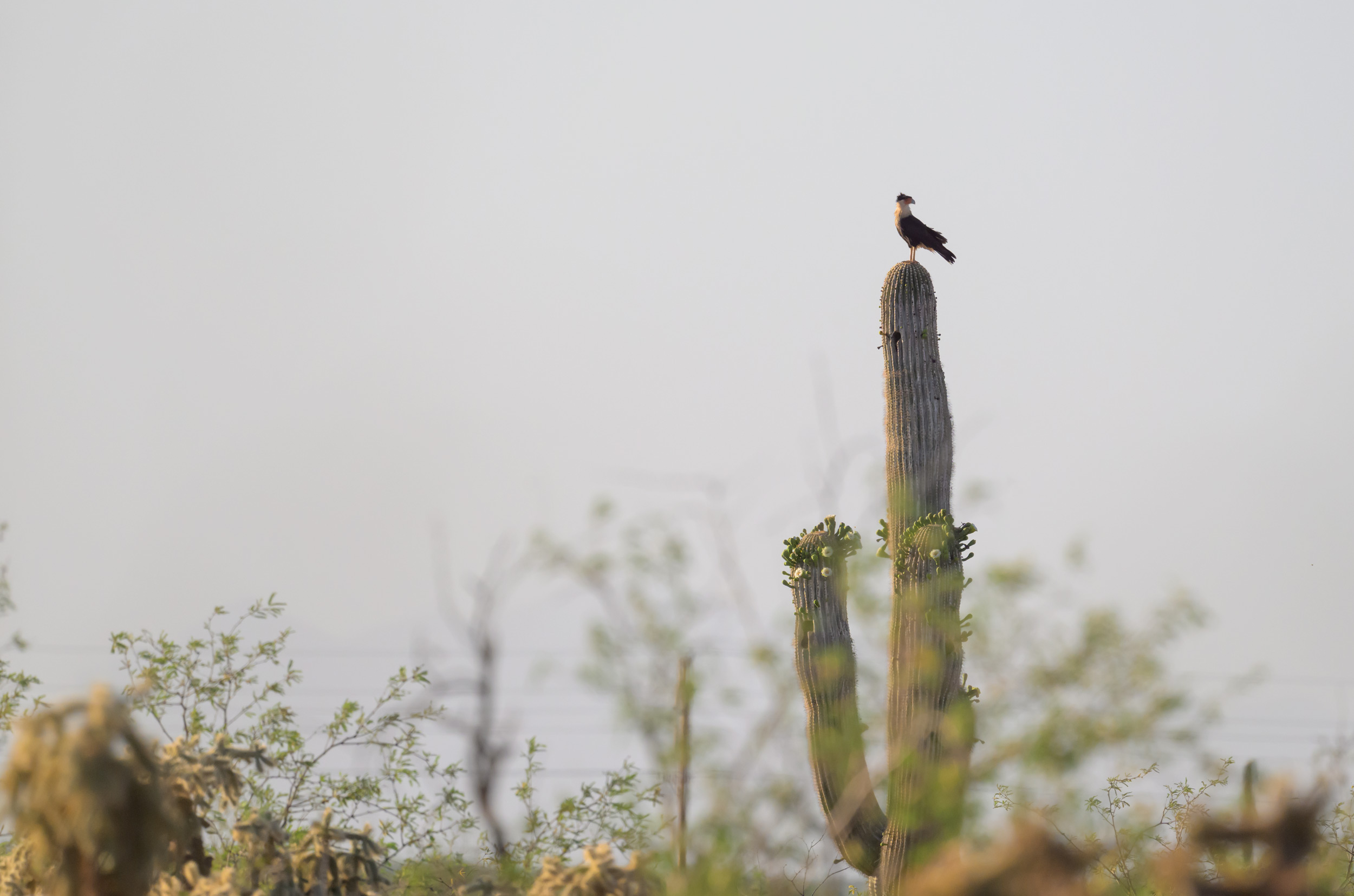
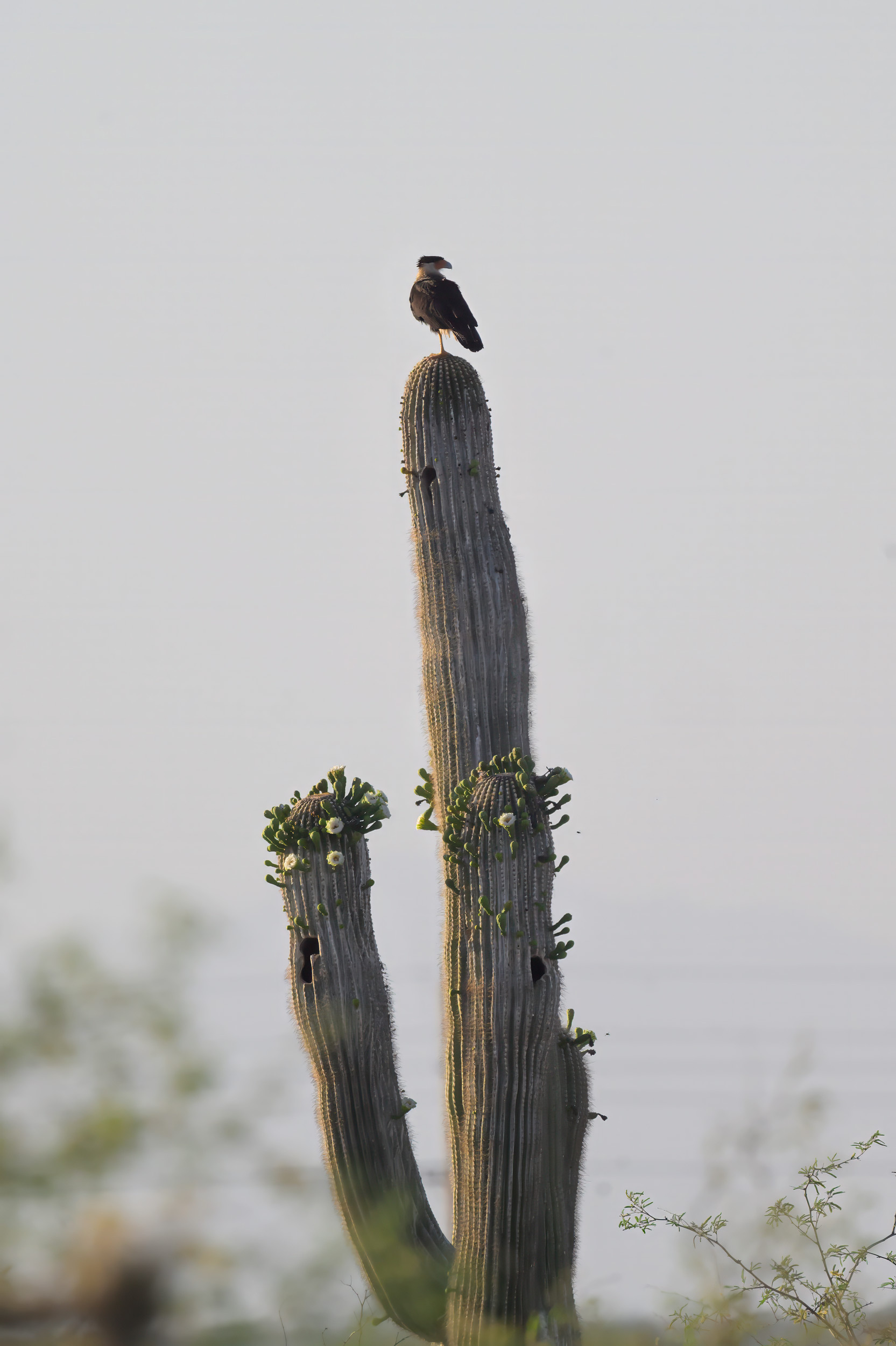
This adult Caracara perched on a distant Saguaro Cactus made with my 600mm.
With the Caracara being so far away and me unable to get closer due to ethical considerations (respect for the bird and property rights) I turned to my trusty took kit and swapped out my 100-400mm for my 600mm f/6.3 and my 1.4xTC (Teleconverter) to get more intimate images. This was something I needed to do earlier, rather than later.
The 100-400mm 4.5-5.6 VR S lets in more light than my 600mm f/6.3. The only real downside to a teleconverter is the loss of light. My f-stop drops to f/9 when I use it on my 600mm. Using the teleconverter, my 600mm is essentially a 840mm lens. I can also use the crop-sensor trick to get in even closer to my subject with a teleconverter on bringing my focal length to 1260mm. This gives me a lot of creative flexibility and the ability to create more intimate images.
Crazy enough, this is the “inexpensive” way to meet these distance demands. To get glass (a lens) that will reach (longer focal length) these distances that allows more light (f/4 typically) requires tens of thousands of dollars.
Making pictures at f/9 means my camera is effectively slower at focusing, so it works best with larger birds in full sun, or in this case birds that aren’t moving much. As the sun sets, I must crank my ISO to crazy high numbers if I want to continue creating images at this focal length. This would be unthinkable with a traditional DSLR.
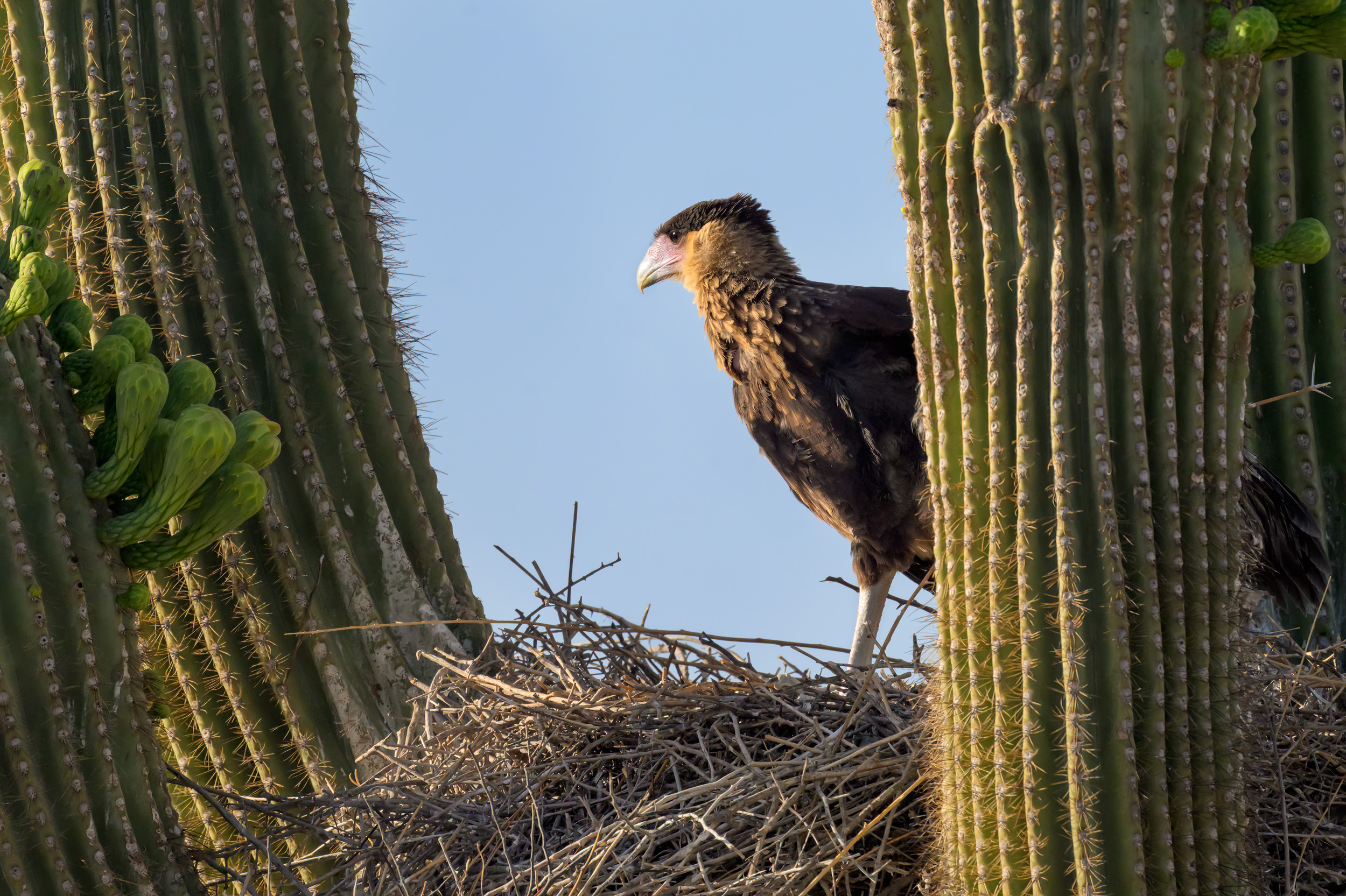
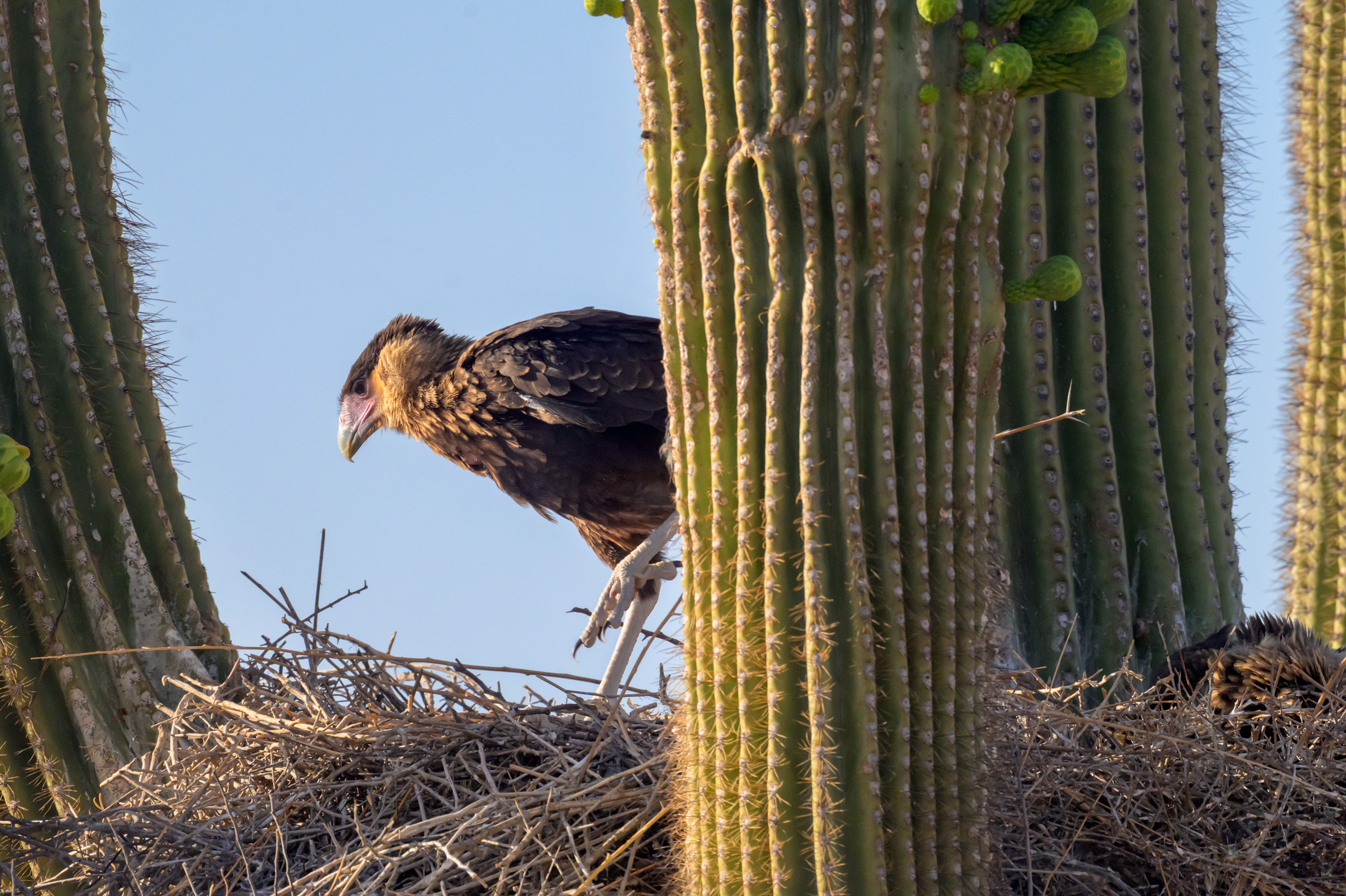
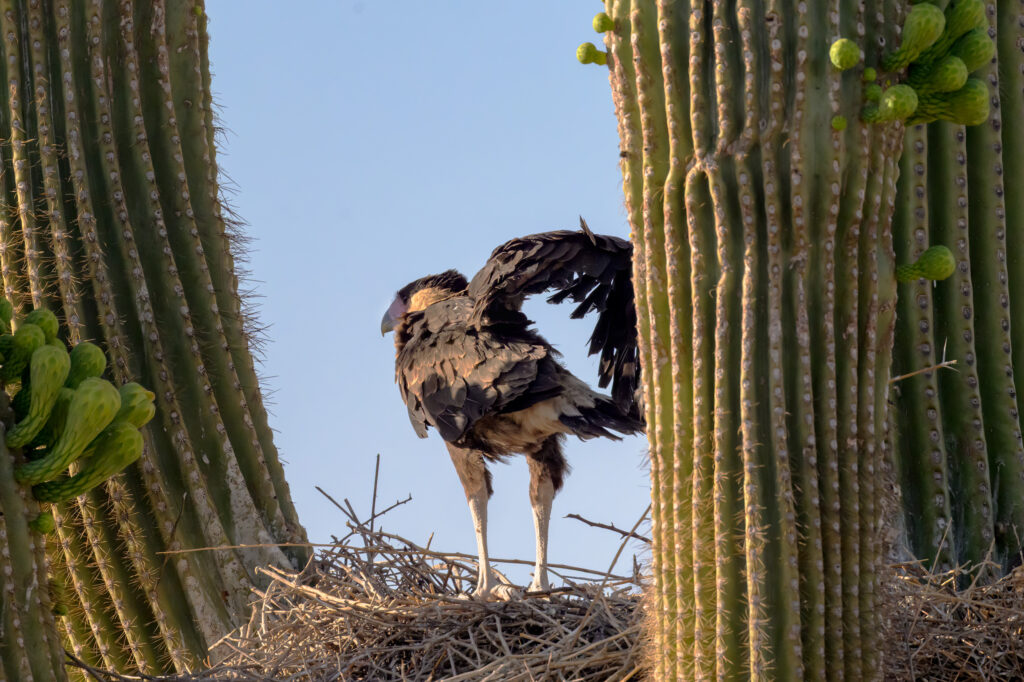
Distance Brings Out Creativity
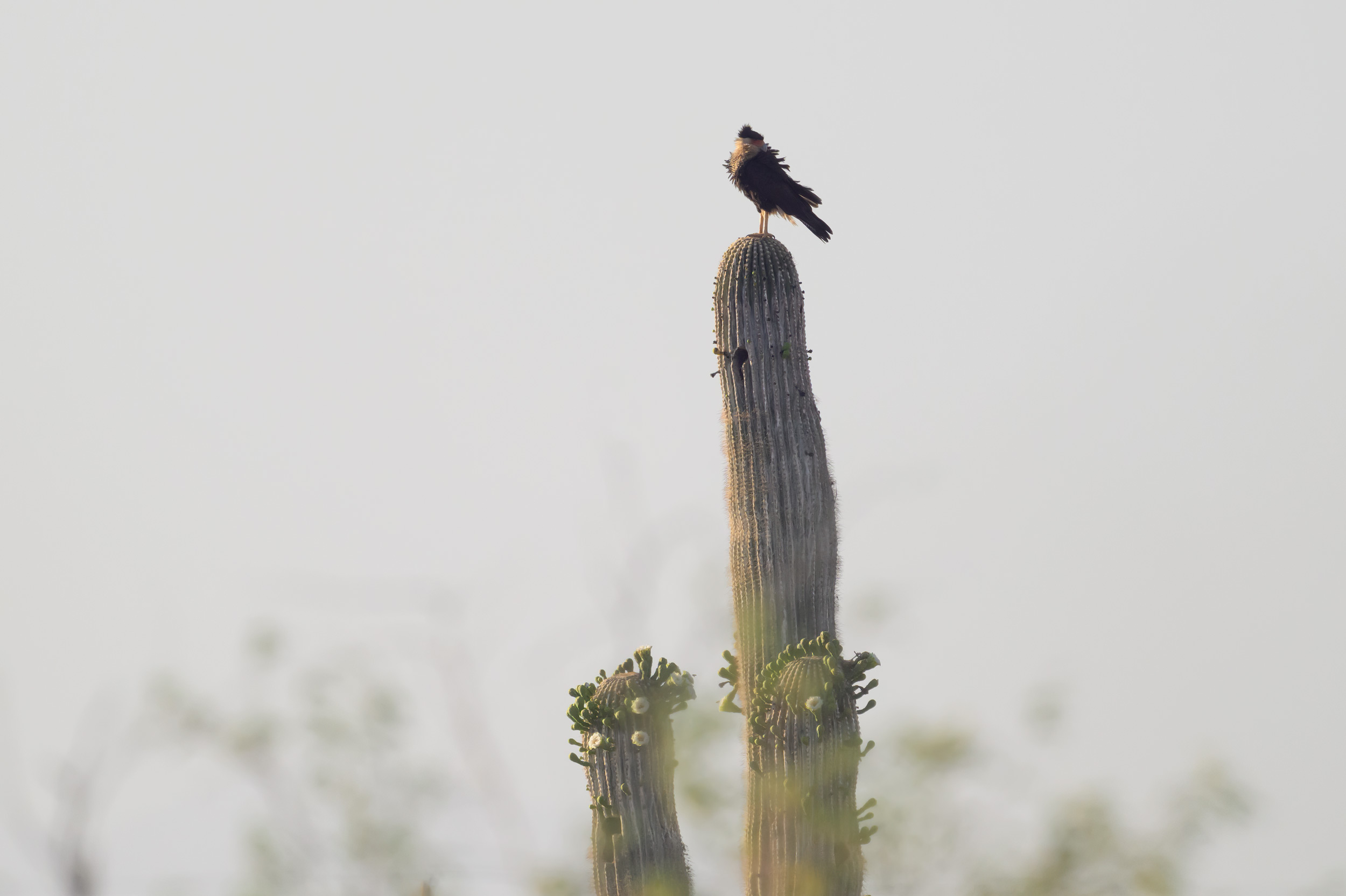
This adult Caracara was even farther than the large Saguaro where their nest was. With my 600mm and 1.4TC, this is the images I was able to make.
A zoom lens can be used for more than just close-up work.
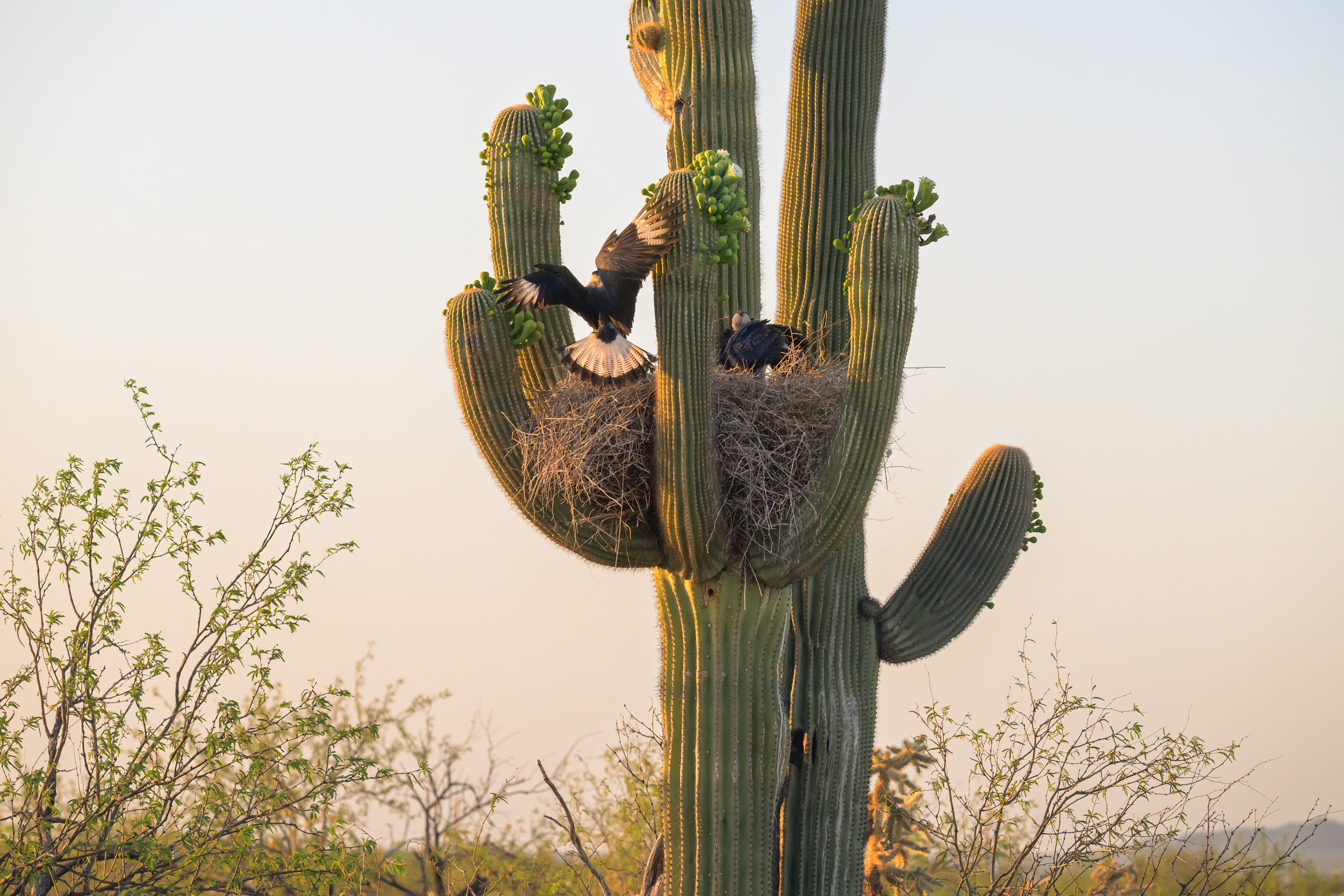
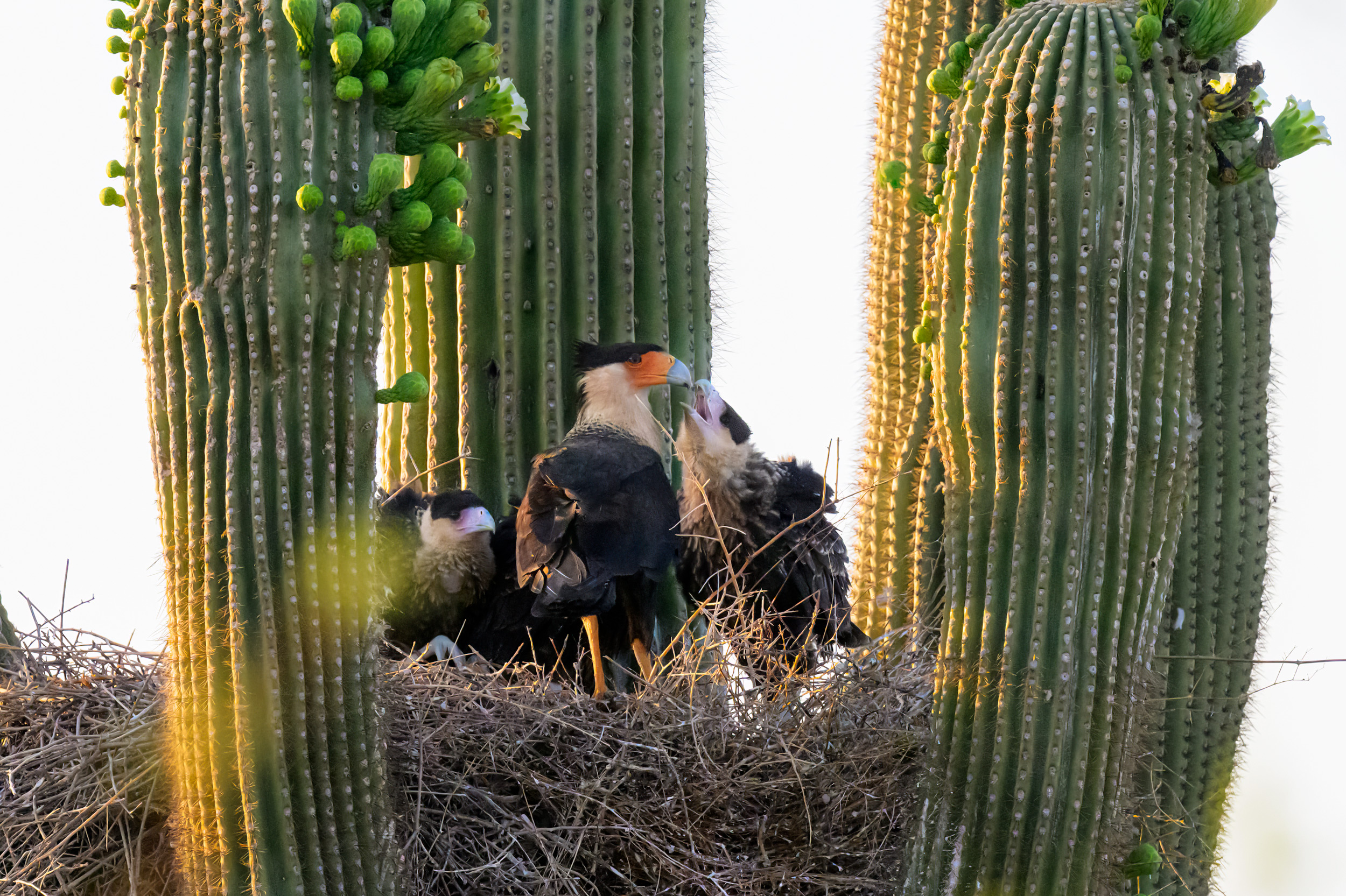
An adult brought some food for their chicks. It was a very exciting moment we were all hoping for before the sun sank too low into the desert.
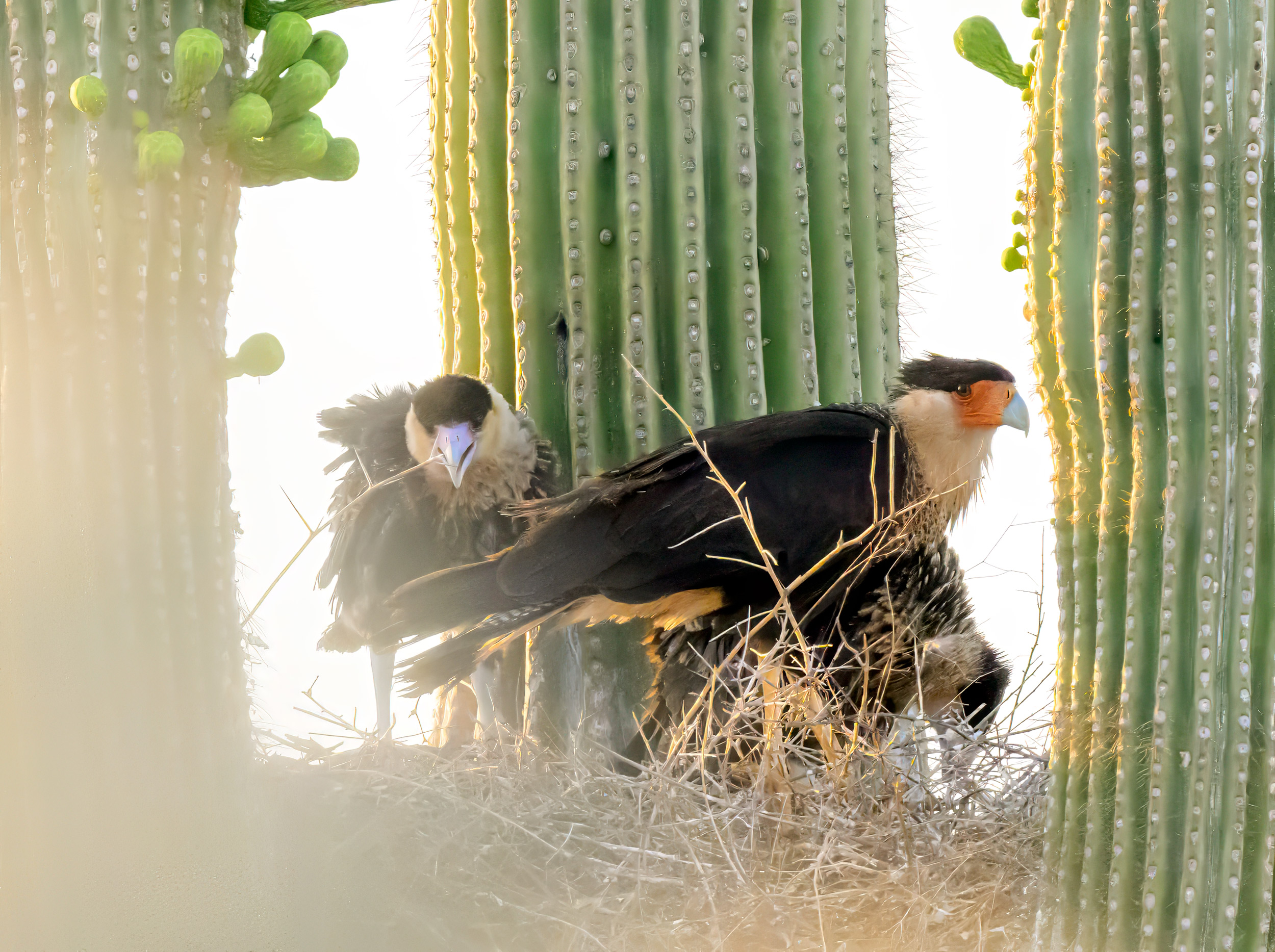
These chicks are ready for their supper! I’m thankful not to be an adult Caracaras. They must burn a lot of calories during nesting season.
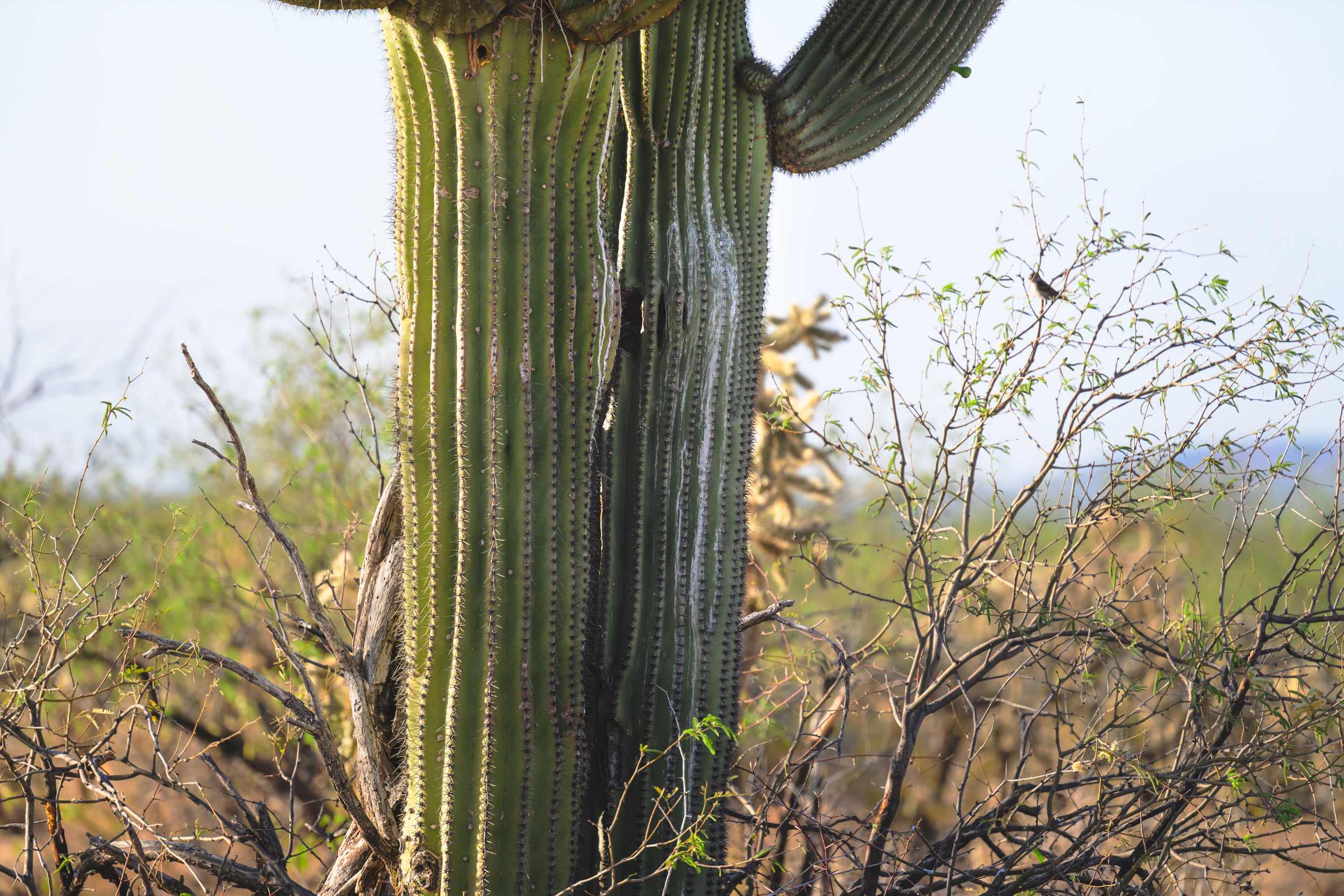
Another thing the chicks do is make a big mess! I’ve heard this described as “paint”.

Eventually, the sun was setting too far for me to get more images. The light was gone. It was time to head back to the hotel.