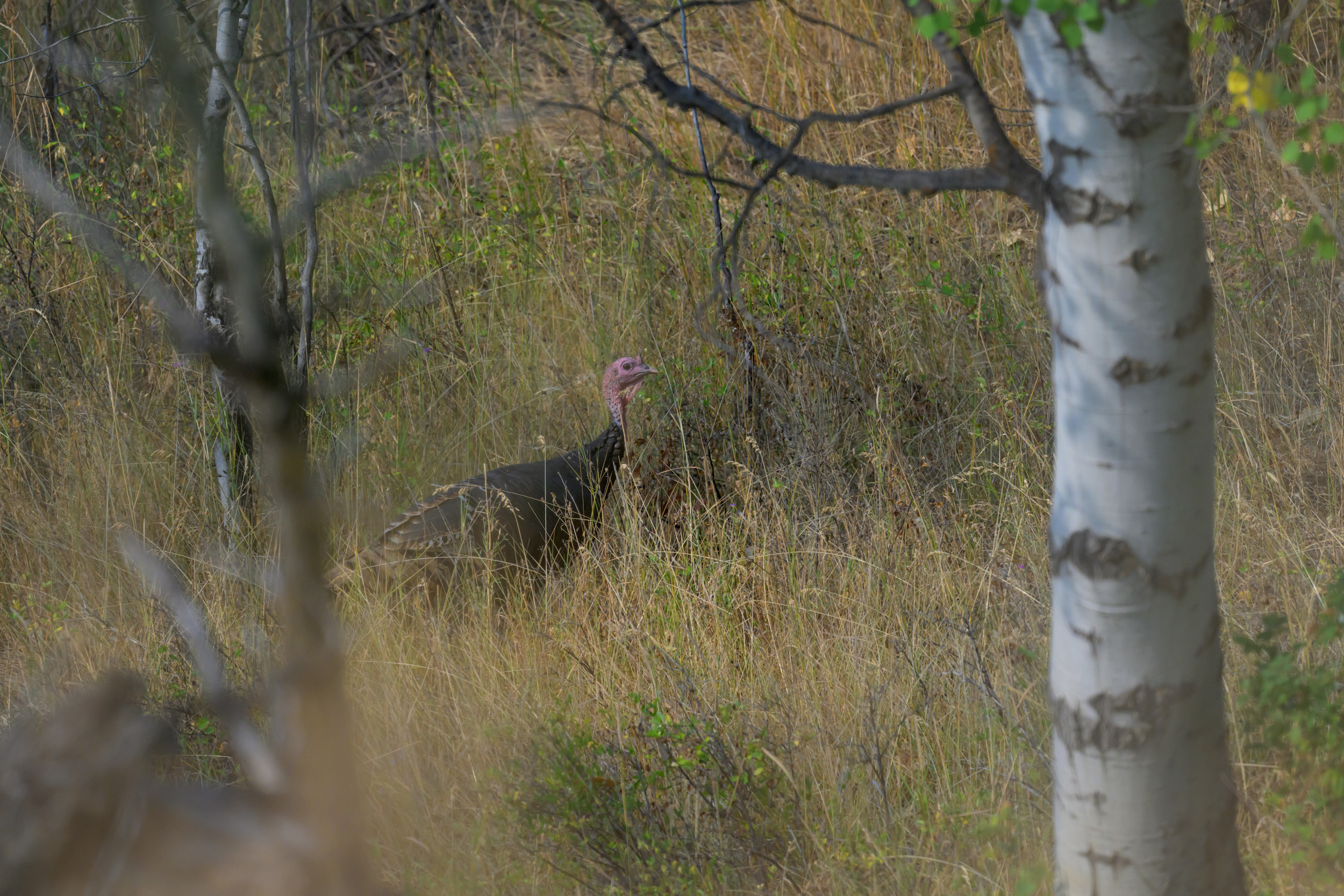
Transplanted Turkeys Have Become the Ultimate Locals
Written and Photographed by Karen Edwards
Who Says I’m not a local?
Wild turkeys appear everywhere in the Inland Northwest. You can see them in neighborhoods and agricultural fields. Their huge bodies are unmistakable, especially since they tend to mass together in large flocks.
In the South Hill of Spokane, Washington, they are so numerous, they often stop traffic when they calmly strut across avenues.
I was surprised to find out these common sights during road trips and jaunts to the grocery store were brought here from the East Coast of North America in the early 20th Century.
Their population has since exploded and not everyone is happy about it.
The Turkey Almost Went the Way of the Dodo
Turkeys have graced the tables of many English Christmas Dinners since the late 1500’s, when they were being shipped to England from America.
Commercial hunters could catch hundreds in a day as they had been semi-domesticated under the land-use practices of Indigenous peoples.
Wild turkeys lost their habitat as settlers began clearing the forests and establishing industry, which combined with over-hunting, decimated their population.
By the 1920’s, turkeys were absent in 18 of the 39 States they previously inhabited — a 90% decline.
The remaining turkeys were very difficult to capture, making restoration efforts incredibly challenging.
As people began to move into cities, rural farmlands began to revert into native habitat and the Wild Turkey population began to reestablish itself.
Is there such a thing as too many turkeys?
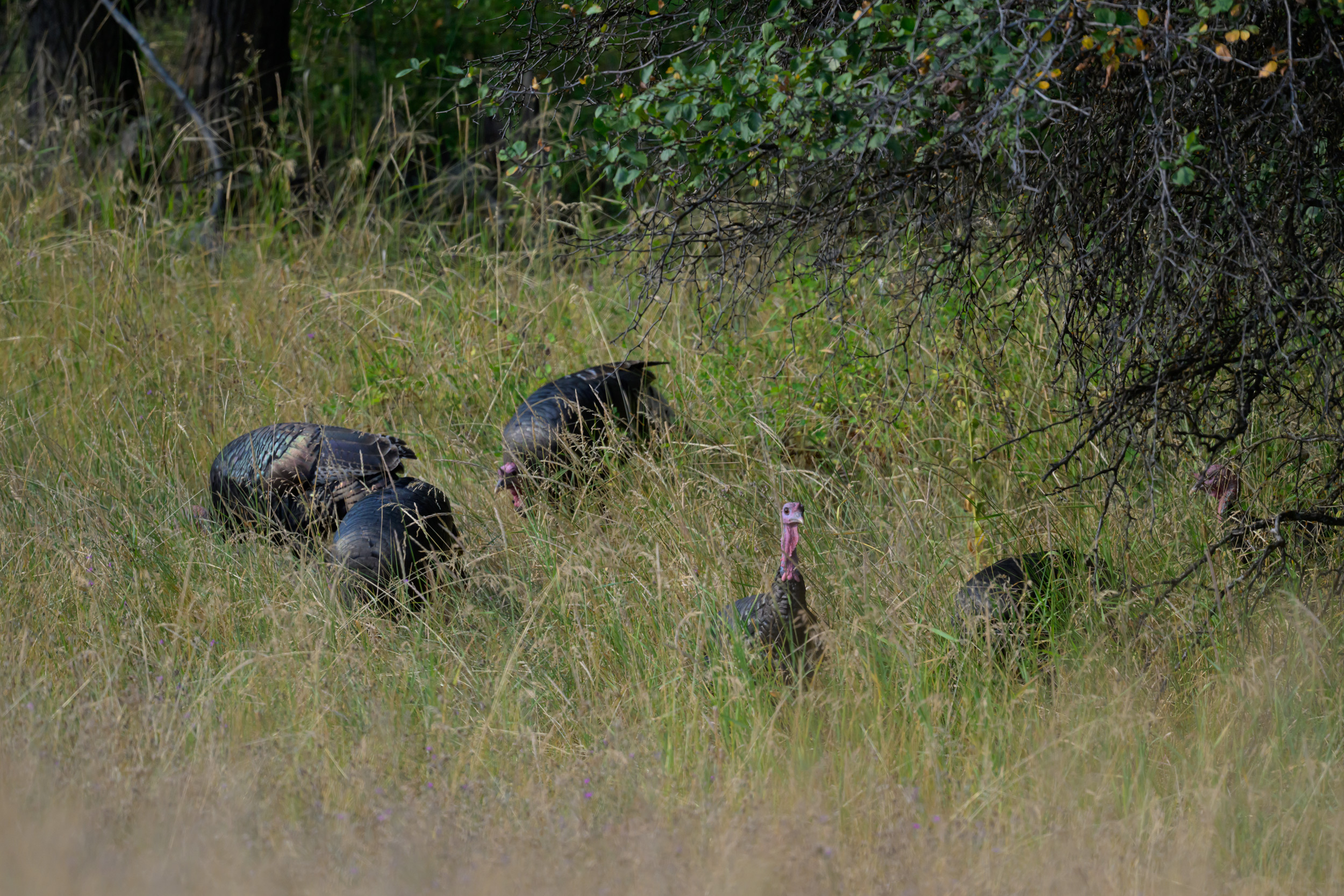
In 1948, land managers began using a new contraption to catch wild turkeys: the net cannon. The hard to capture Turkeys had finally met their match.
The United States Fish and Wildlife Department (USFW) began successfully relocating wild turkeys into their traditional home ranges. In 1961, Stanley E Guenther, a State Game Biologist from Spokane, captured wild turkeys in Wyoming and released them near the Columbia River, South of Kettle Falls, bringing the first ever Wild Turkeys to Washington State.
By 1966, these birds were so successful at breeding, hunters requested a longer hunting season to relieve the pressure on their farms from the destruction caused by the turkeys.
Everything Wants to Eat Turkeys
The life of a wild turkey is a difficult one. From the moment they are deposited in the nest, still inside their egg, they are in danger of being eaten by everything from crows to raccoons.
Once they hatch, these precocial creatures can walk and are able to eat the seeds, nuts, and fruits their mother brings them. Their mother continues to protect them from the carnivores, raptors, and reptiles who prey on them until they are old enough to fend for themselves.
As the populations of both people and wild turkeys continue to grow, humans will increase these mortality pressures by introducing domestic predators–dogs and cats who are quite adept at finding unsuspecting animals and birds.
Wild Turkeys are cautious
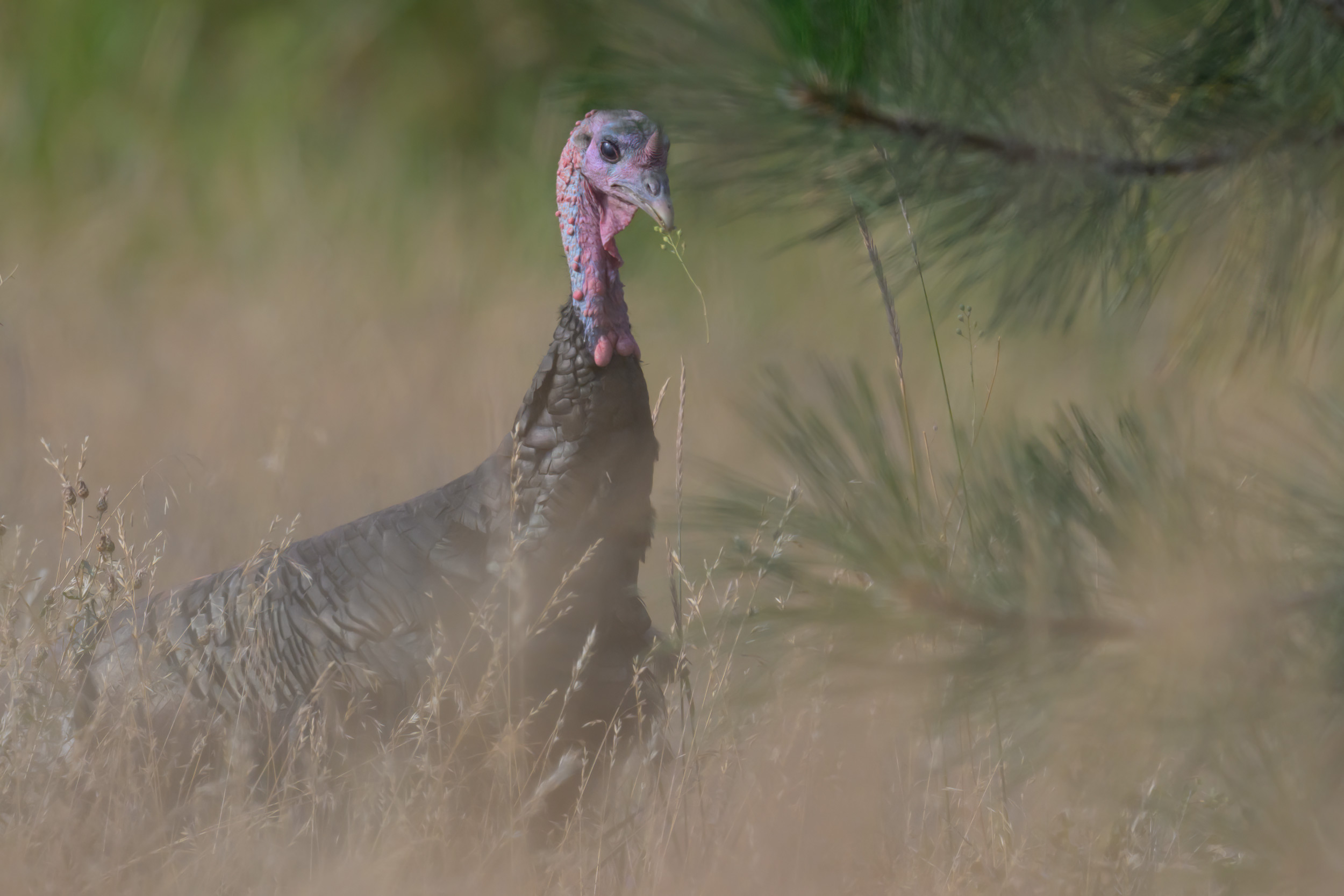
Wild turkeys are the largest ground bird in North America, able to run faster than a human, and armed with spurs sharp enough to slash into the skin of predators.
They seem to believe they are cautiously moving through the tall grass but their movements sound similar to the crashing caused by a large moose!
They often stop often to surveil the landscape for predators. All of them are ready to trot off or fly into the nearest tree at the slightest sense of danger.
No, those are not warts…
One of the reasons I got into photography was to be able to linger on the details impossible to see long enough through binoculars alone.
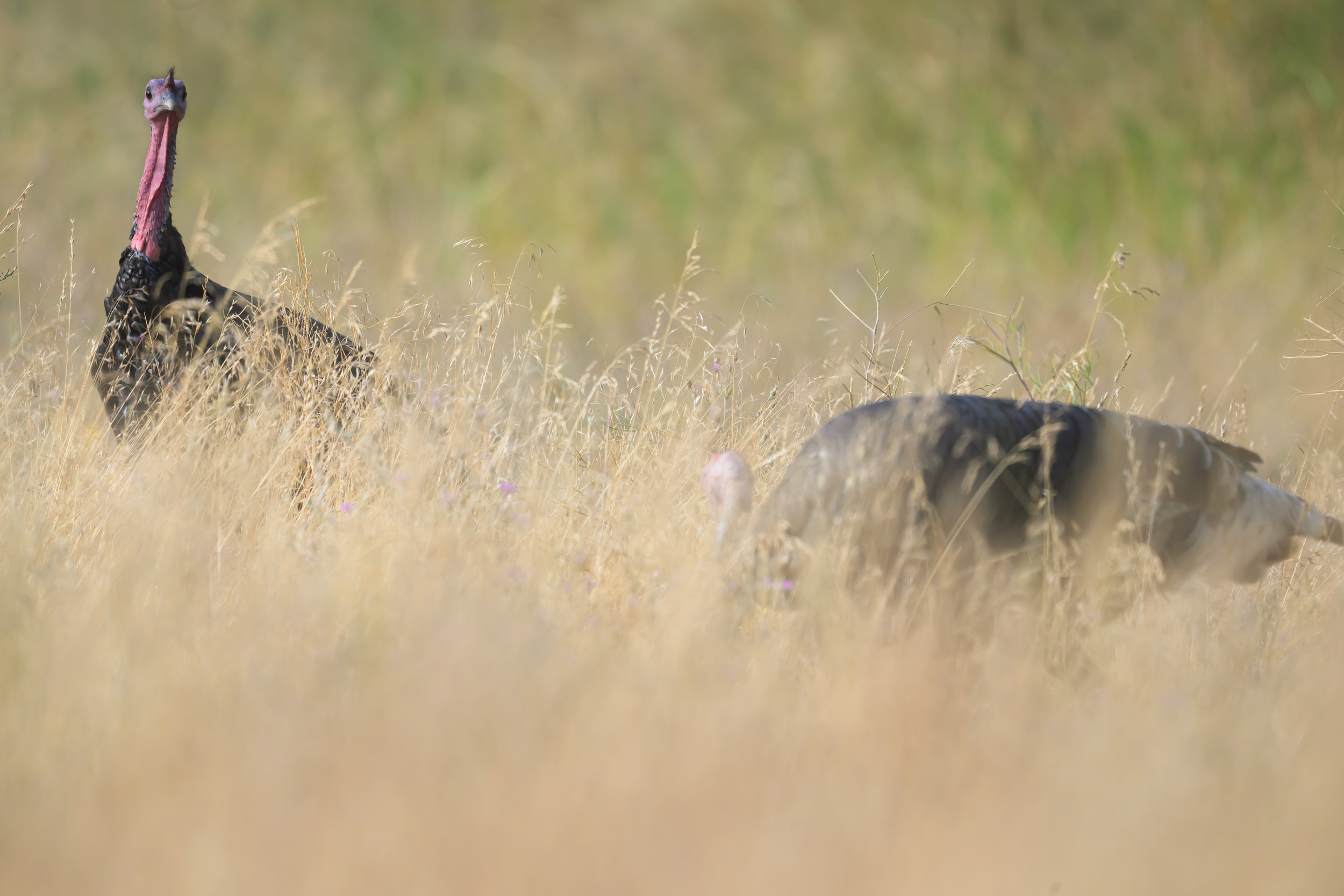
How else would you be able to notice the neck protuberances that look like puffy bags, called carnucles, growing along the head and neck of this turkey? Both sexes have them but the female’s tend to be less prominent than the male’s. The male’s caruncles are especially pronounced on the lower portion of the neck, like in this image.
From what I can tell, this turkey is known as a Jake, which is a classification hunters use to differentiate young male turkeys from older Toms.
Females are referred to as hens.
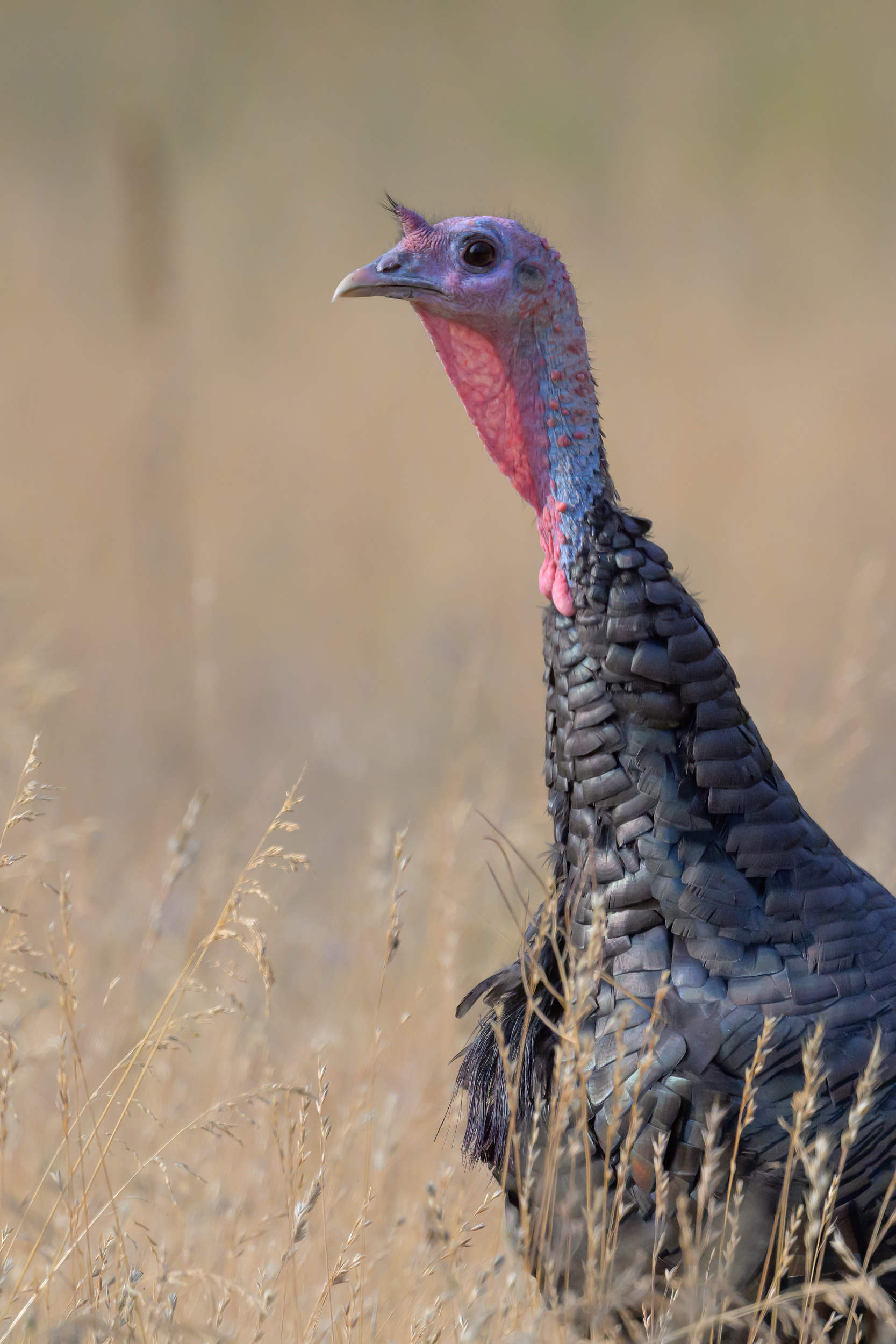
If you look closely, you can see this turkey’s snood. It’s the hairy triangle on the ridge line of their face. Females have small snoods and males, as they get older, typically develop long droopy ones. Apparently, they can engorge when trying to entice the ladies to mate.
Turkeys have visible ears, which you can see to the right of the eye. Their ears are able to register sounds separately, which gives them the advantage of being able to determine distance accurately.
Turkeys can have 5000-6000 feathers! Their brilliant iridescence is caused by sunlight refraction.
Are wild turkeys a problem?
Depends on who you ask.
People who live in rural areas, where turkeys have been known to tear up their vegetable gardens and get into unsecured trash bins might refer to them as “trash turkeys”. I have heard remarks about being frustrated the hunting period is not long enough to control their numbers.
People who live on the South Hill in Spokane who have rescued their kids or dog from a wild turkey stand-off would certainly agree with the farmer.
For myself, a transplant to these parts, I find them amusing to watch, yet wonder, considering they are an introduced species, if their presence here is a problem for native species. I’m not the only one who has considered this. During a Spokane Audubon meeting, a member questioned a Washington Fish and Wildlife (WFWD) presenter about what they would do about the destruction to local grouse nests by wild turkeys, the first I had heard of such a thing. I looked online for more information and the consensus this is a myth. I reached out to the presenter but they didn’t return my query.
Two graduate students from Oregon State University wrote a thesis concluding turkeys are not directly or indirectly impacting native plants or wildlife in Washington or Oregon.
Resources
I knew nothing about turkeys when I took these pictures. I still only know what I found online. If you research turkeys or have an anecdote about them, please share what you know in the comments. I’d love to hear from you!
https://ir.library.oregonstate.edu/concern/graduate_thesis_or_dissertations/ws859j35z
https://fi.edu/en/science-and-education/benjamin-franklin/national-bird
https://www.tn.gov/twra/hunting/big-game/turkey/wild-turkey-identification-tutorial.html
https://www.spokesman.com/stories/2026/jan/07/nuisance-turkeys-in-boises-north-end-do-what-rain-/
https://www.spokesman.com/stories/2025/jul/17/gardening-turkeys-arent-usually-a-problem-for-gard/
https://www.spokesman.com/stories/2024/nov/24/cool-critters-grateful-for-the-turkey-crossing-the/
https://www.spokesman.com/stories/2024/aug/02/turkey-shows-interest-in-renting-guest-bedroom/
https://www.spokesman.com/stories/2019/oct/20/turkeys-in-washington-invasive-species-conservatio/
https://wdfw.wa.gov/species-habitats/species/meleagris-gallopavo
https://wildturkeylab.com/wild-turkey-myths/
https://www.nwtf.org/