for THE FEN
OKANOGAN LAND TRUST
Bonaparte Meadows: Home of the Largest Calcareous Fen in Washington State
What is a Calcareous Fen?
A calcareous fen is on of the rarest wetland types in the United States. Washington State is home to some of the rarest and highest quality calcareous fens in the Pacific Northwest. These fens happen to be a few hours drive from my house and I had been driving by them without understanding their importance.
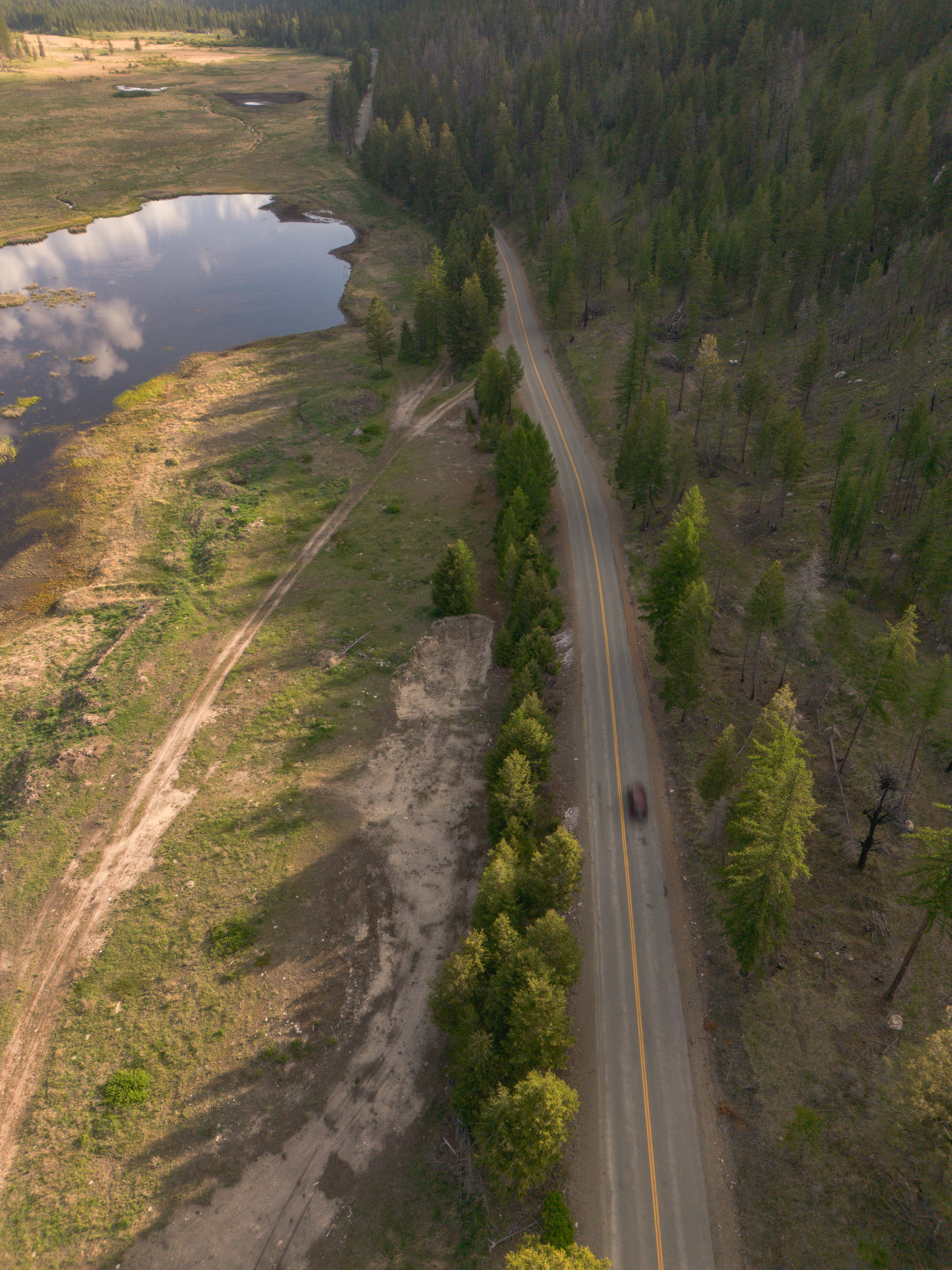
Bonaparte Lake is a short drive away from our property in Republic. Sometimes we stay at the campground in the summer and swim in the cold lake. When the kids are still asleep in the morning, my husband and I will sneak into the Bonaparte Lake Resort where you can still get steak and eggs and a stiff cup of coffee.
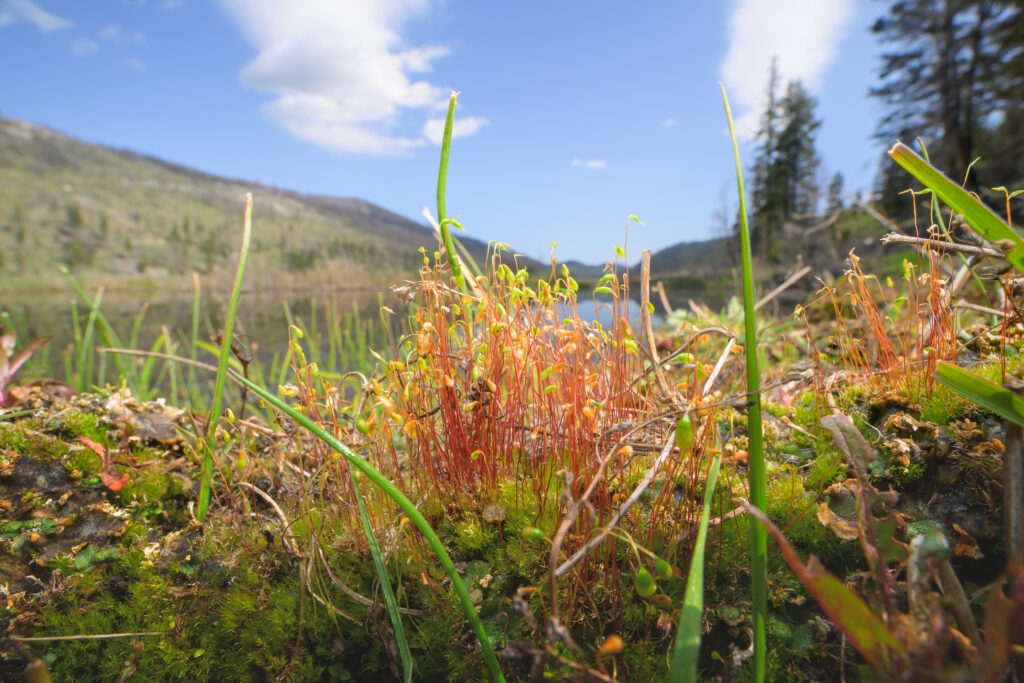
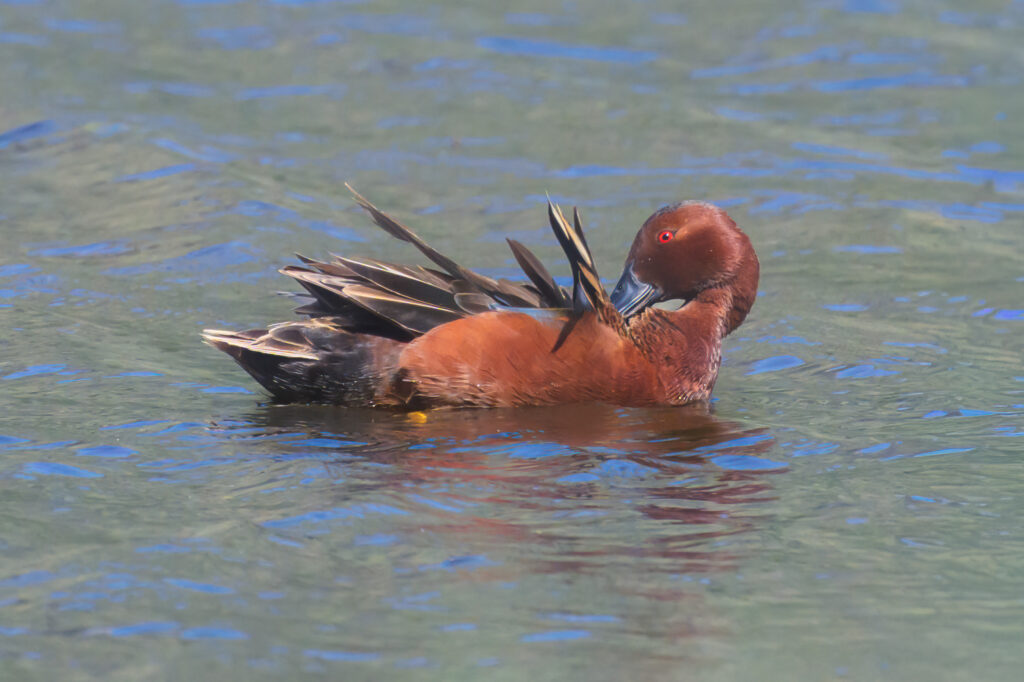
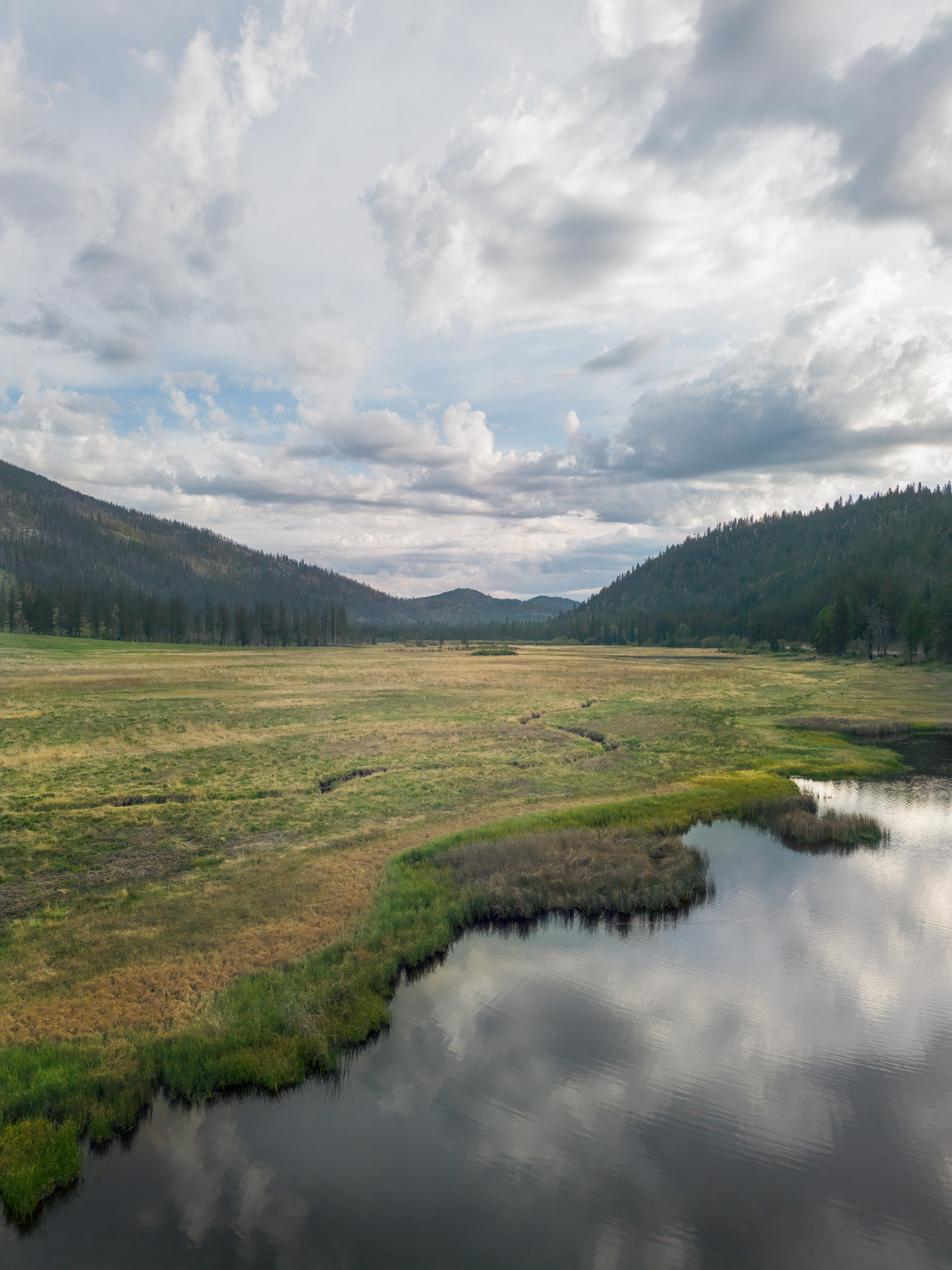
On the road to the lake, there is a huge wet meadow that always grabs my attention. I typically slow way down to scan the ponds for waterfowl. I had always wanted to explore and take a longer look but it’s private property, so I stole these moments when I could.
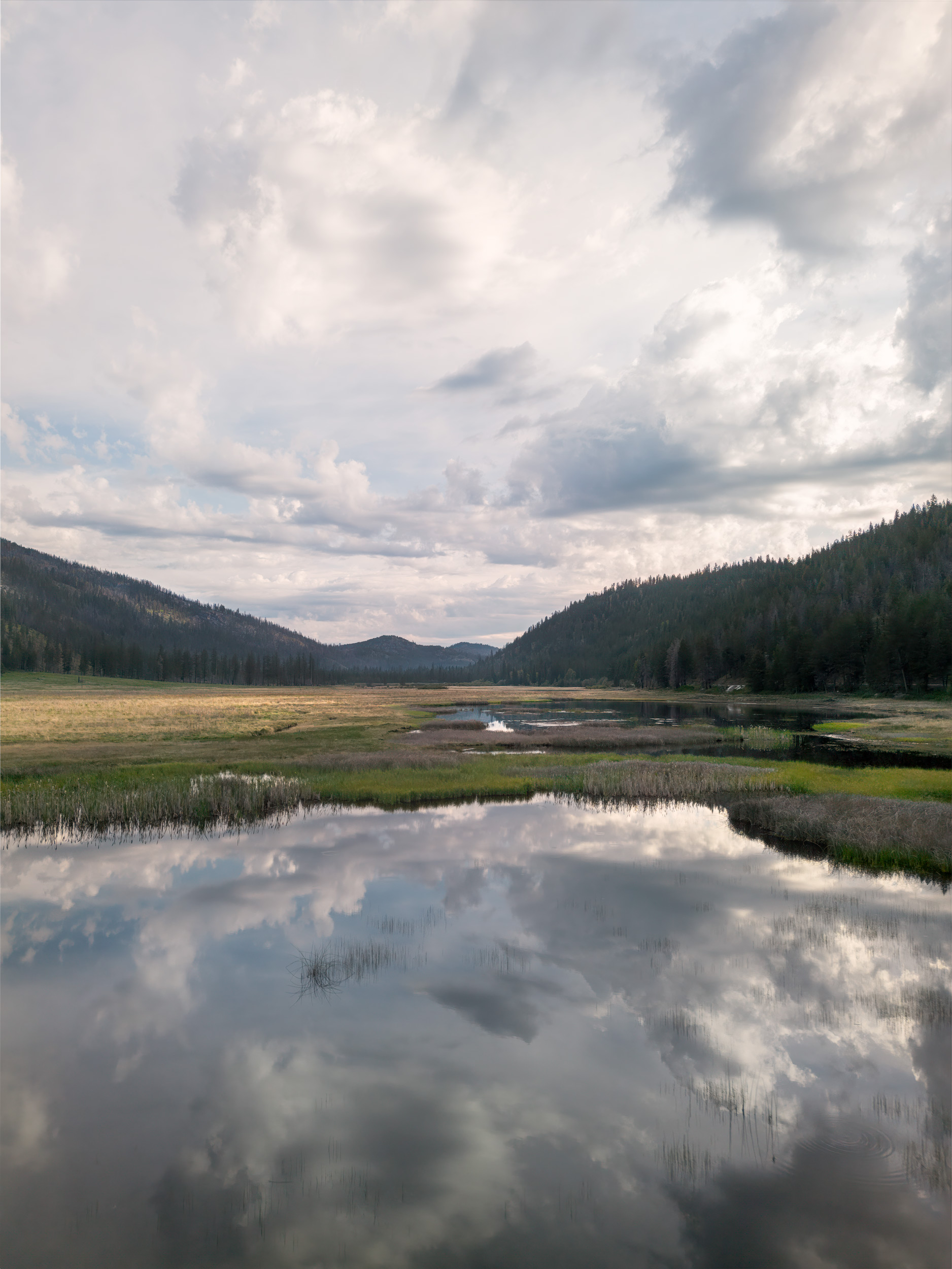
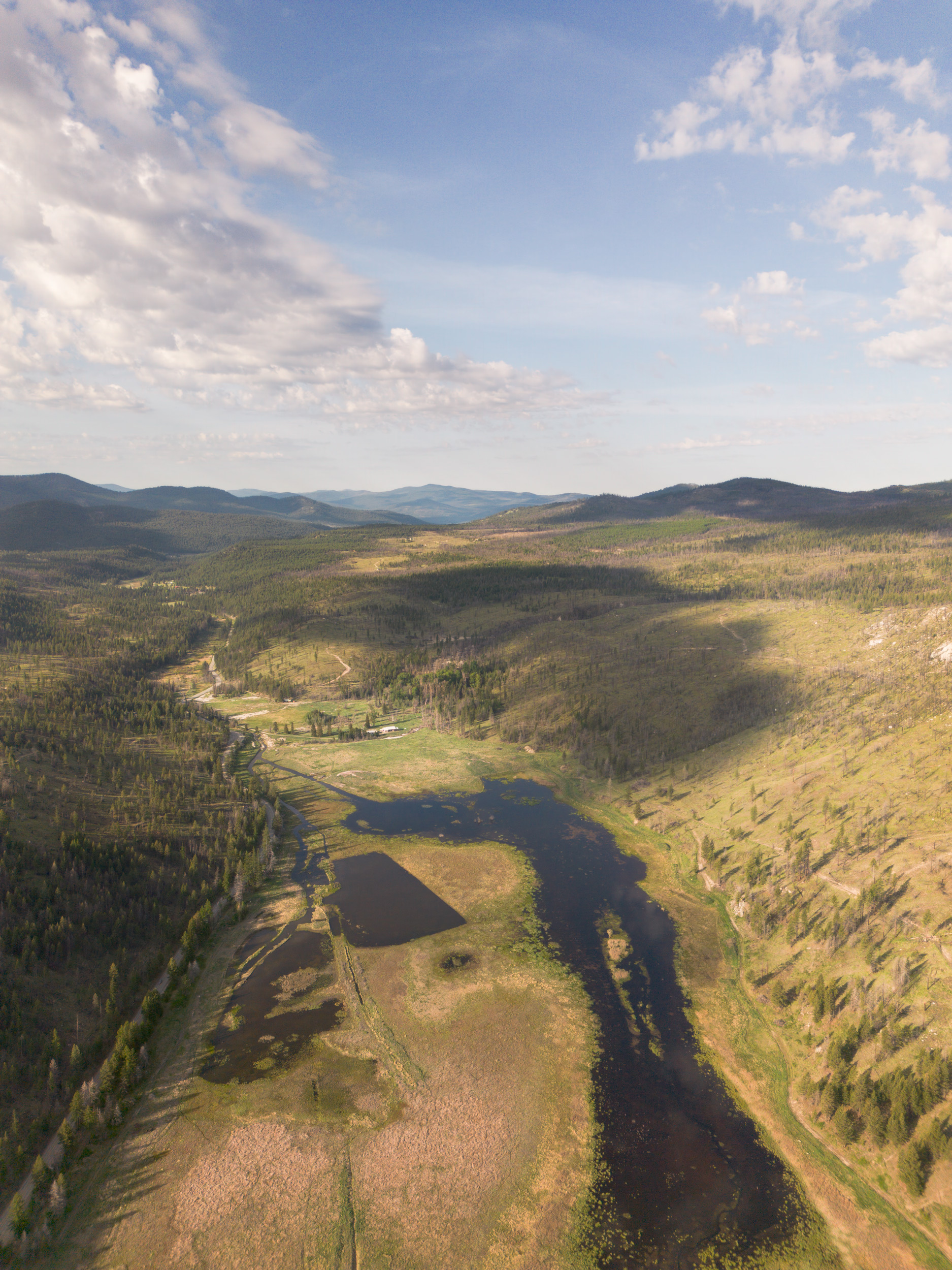
Last month, Republic was holding a Conservation Fair and that’s when I saw a sign “Save the FEN”. I recognized that word! I had read the book “Fen, Bog and Swamp: A Short History of Peatland Destruction and Its Role in the Climate Crisis” by Annie Proulx some while back but the details were foggy. I stopped to talk to the man at the booth to ask him questions. The first one was, “where is this fen?” and the second one was “what is it?” Little did I know, the meadow that I have been wishing I could explore was one and the same! When they said they needed some high quality images for their campaign, I could hardly contain my excitement! I was going to get to explore the Bonaparte Meadows–it was the fen they were trying to save from development!
Unlike a bog, which is rain fed (ombrotrophic), a fen gets its water from groundwater and surface water (minerotrophic). Bogs tend to have very acidic, poor wet soils, while fens have medium to rich soil that is slightly acidic/neutral pH and surrounded by sluggish water.
Glaciers and Calcareous Fens
What makes a calcareous fen so unique is the way it was formed. The calcareous fen at Bonaparte Meadows was formed about 7,500 years ago according to Dr. Karl Lillquist Emeritus Professor, Dept. of Geography from Central Washington University. As glaciers receded, they left behind carbonate-rich glacial deposits of sand, gravel, and crushed limestone which act as deep aquifers today. These harsh, mineral-rich, highly alkaline, and constantly wet conditions foster highly specialized, calcium-loving (calciphiles) plants.
How Did Calcareous Fens Form?
From what I’ve read, I think the fen at Bonaparte Meadows can be defined as a Basin Fen but I’m no expert. These types of fens were originally ponds or lakes and have been filing up with peat over time. When plant matter accumulates faster than their decomposition rate, while being completely saturated, peat will accumulate.
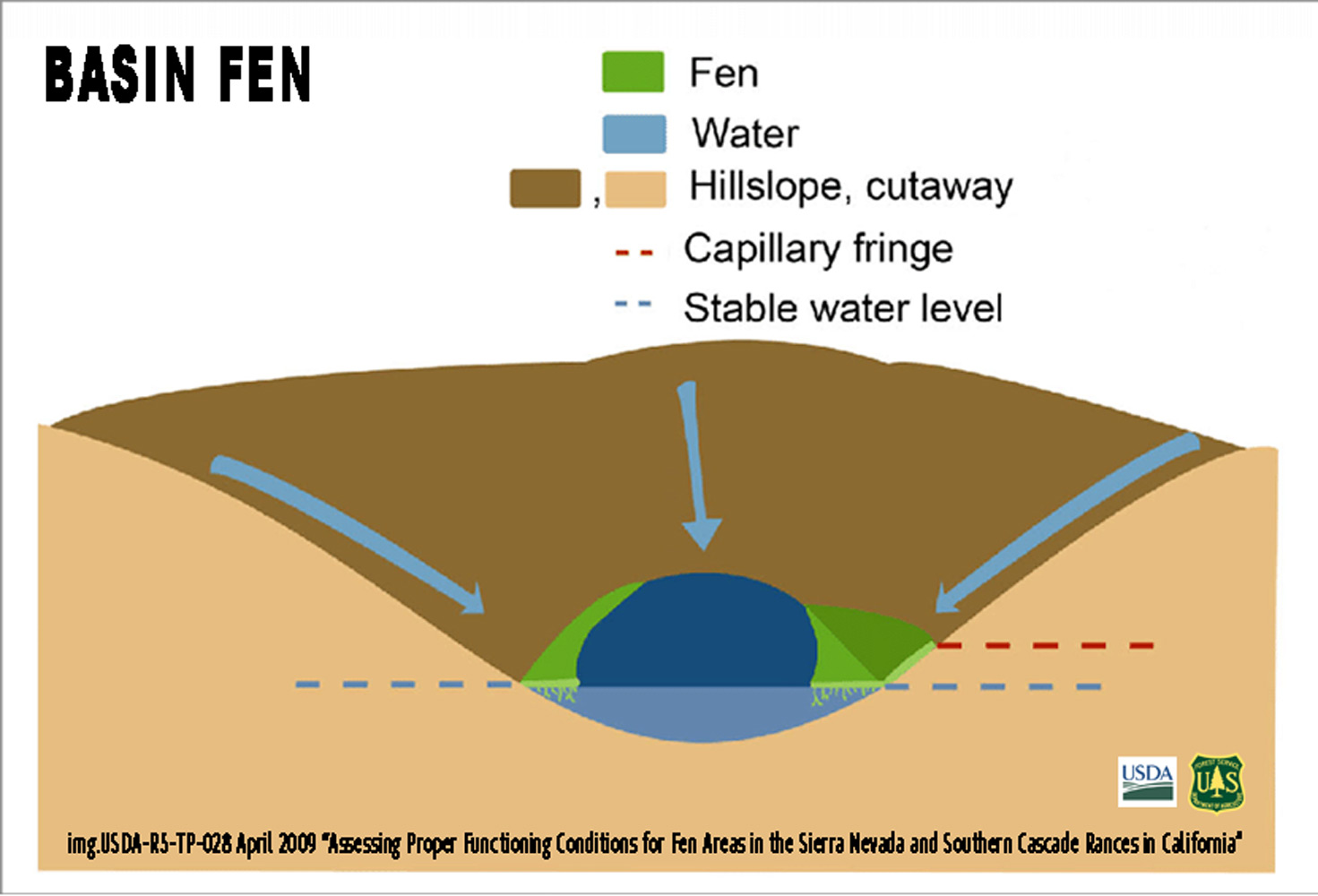
A Basin Fen tends to be flat, quite large, and occurs near margins of open water. The thickness of the peat is critical for the ecosystem to function, as they hold large amounts of water, even during the summer months.
Plants that grow in the peat are rooted or derive all or most of their water and or nutrients from the peat itself.As you can imagine, this process takes thousands of years and the plants become quite specialized, which is why this is such an important ecosystem to protect.
How Rare are Calcareous Fens?
Calcareous Fens of the United States
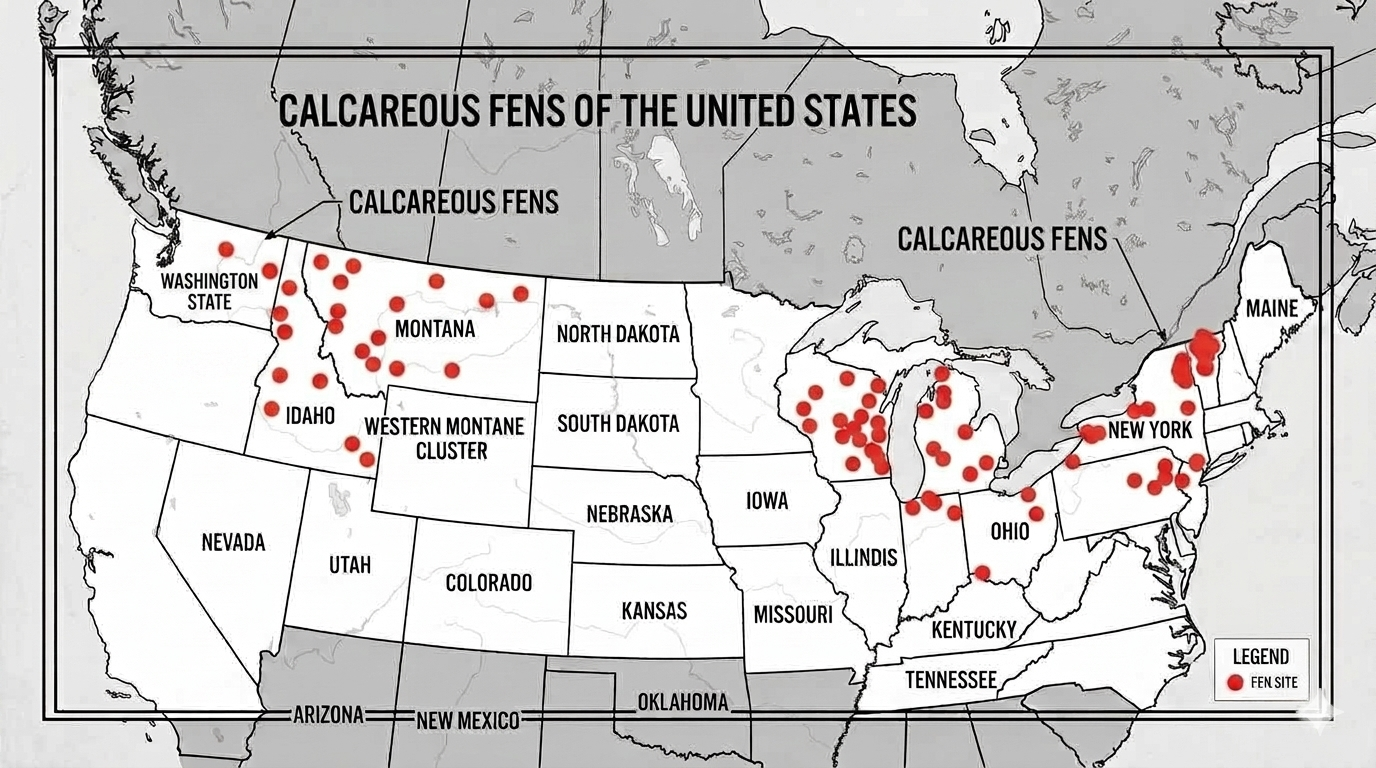
Most calcareous fens can be found in the upper midwest (Minnesota, Wisconsin, Michigan, Ohio, Indiana, Illinois), basically wherever carbonite-rich bedrock and specific groundwater conditions exist. These fens reach into Ontario, Canada as well. The remainder are scattered throughout New England and mountainous Western Regions mostly in Montana and Idaho.
This page reflects my own research and personal understanding of Bonaparte Meadows. If you are interested in learning more, I found the Minnesota Department of Natural Resources , Joe Rocchio (Senior Vegatation Ecologist for WA DNR) peatland presentation, and the USFS work on peatlands to be very helpful resources for this article.